AI Search Is Coming to B2B Buying — Will Your Product Data Be Understandable?
6/18/2026
AI search will not magically understand messy distributor catalogs. Here is how to make product data structured, source-backed, and useful when buyers ask complex B2B questions.
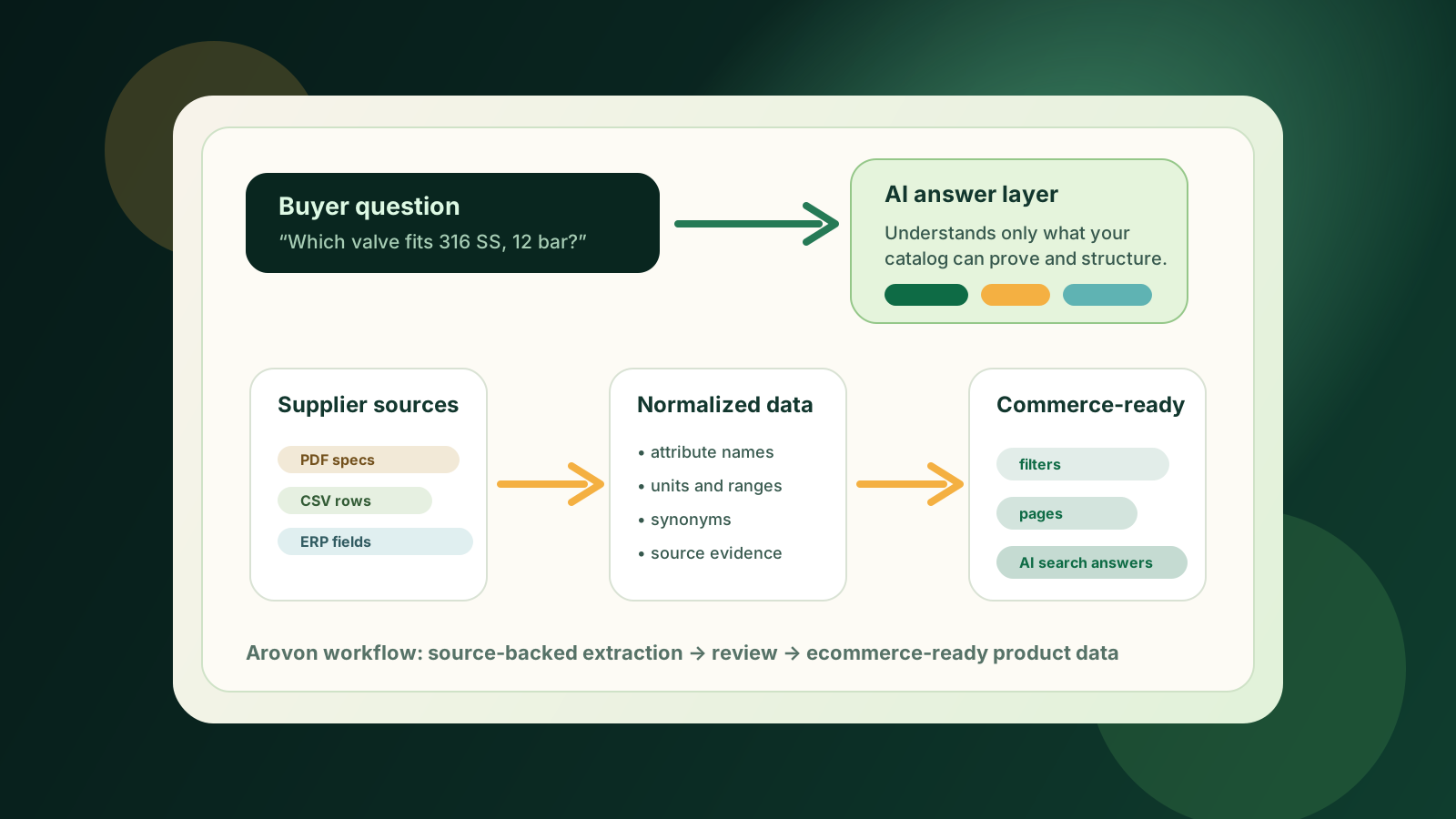
B2B buyers are already using search engines, marketplaces, ecommerce search bars, procurement tools, and generative AI assistants to narrow options before they speak to sales. The next shift is not simply “AI on the website.” It is buyers asking more specific questions and expecting the answer layer to understand compatibility, application context, units, alternatives, and evidence.
For industrial distributors, that creates a practical problem: AI search can only reason from the product data it can read. If the catalog says “valve, steel, 12” in one place, “SS 316” in another, and hides the useful spec inside a supplier PDF, the answer will be weak. The buyer may still call sales, but now the call starts with less confidence and more rework.
The good news is that preparing for AI search is mostly the same work that improves ecommerce self-service: clean attributes, normalized units, useful product pages, and source-backed data. The difference is that vague data will become more visible because AI-powered search exposes whether the catalog can answer real buyer questions.
Quick skim: what needs to change
AI search rewards structured, consistent product data more than long marketing copy.
Supplier PDFs and spreadsheets should become source-backed attributes, not just downloadable files.
Product pages need buyer-language synonyms, compatibility clues, and clear constraints.
A good pilot starts with one product family and tests real buyer questions against approved fields.
Why AI search changes the product-data standard
Traditional ecommerce search often matches keywords. A buyer types “stainless ball valve 12 bar” and the search engine looks for those words. AI-assisted search tries to interpret the request: material, product type, pressure rating, maybe application and certification. That interpretation only works if the data is organized enough for the system to separate facts from noise.
Current B2B research keeps pointing in the same direction: buyers prefer more digital self-service, but they still need trustworthy information when the purchase is technical. Gartner’s 2025 buyer survey reported strong preference for rep-free buying, while also noting buyer frustration when website and seller information conflict. In other words, digital channels are no longer “nice to have,” but inconsistent product data still sends buyers back to humans for confirmation.
AI search does not remove the need for expert sales teams. It removes the excuse for product pages that cannot answer basic technical questions.
The data AI search can actually use
A distributor catalog becomes understandable when each product has facts that are explicit, normalized, and tied to a source. This is different from uploading a PDF and hoping the AI can infer everything. The data model should make the important buying criteria visible.
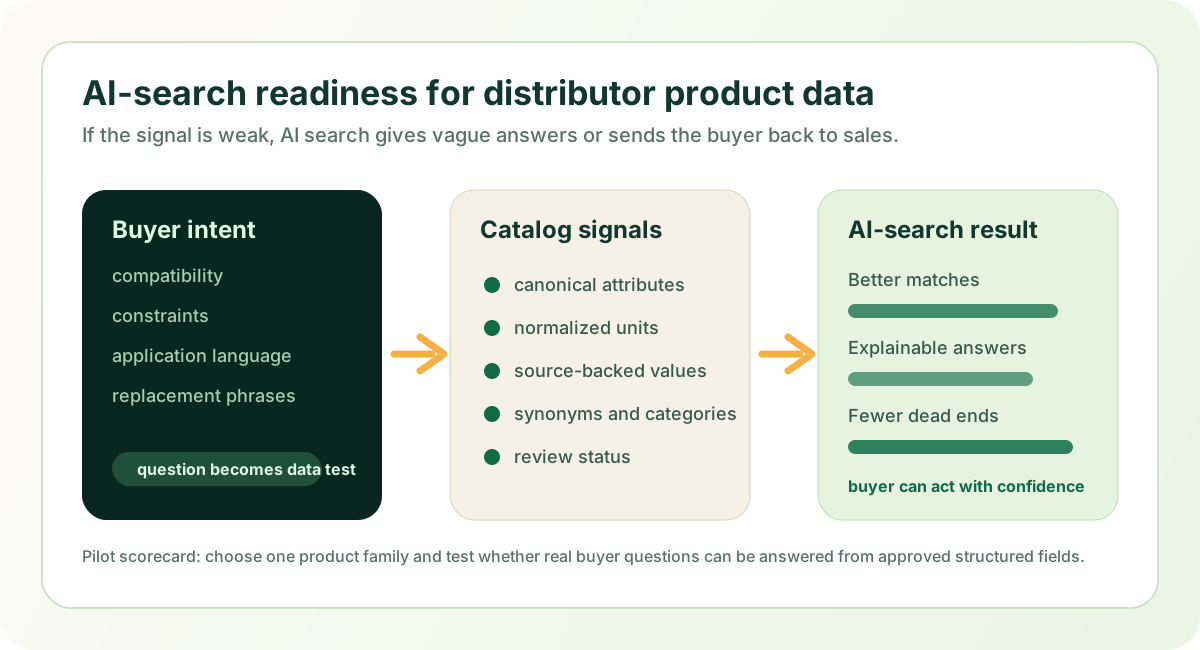
Canonical attributes: use one approved field for pressure rating, thread type, material, diameter, coating, voltage, load, tolerance, or any other decisive attribute.
Normalized units: convert and store units consistently so mm, inch, bar, psi, N, kg, and product-family-specific ranges are not mixed unpredictably.
Buyer-language synonyms: map supplier wording and customer wording to the same concept, such as stainless, SS, inox, and 316 stainless where appropriate.
Source evidence: keep a trace back to the supplier document, row, page, or approved internal record so teams can review why a value was published.
Review status: distinguish extracted data from approved data. For technical products, “AI guessed it” is not a safe publishing rule.
What messy product data looks like to an AI answer layer
Weak catalog signal | Likely buyer-facing problem |
|---|---|
Attributes stored in descriptions only | The system may miss filters, comparisons, and compatibility checks. |
Multiple names for the same specification | Search results split across terms and buyer queries feel incomplete. |
Units copied directly from suppliers | Ranges and comparisons become unreliable across brands. |
No source trail for extracted values | Sales and product teams cannot confidently approve AI-surfaced answers. |
Missing compatibility or application notes | The buyer gets a technically correct product but still cannot decide whether it fits. |
This is why an AI-search initiative should not start with a chatbot alone. If the underlying product data is thin, inconsistent, or unsupported, the chatbot becomes another place where the weakness is exposed.
Start with real buyer questions, not a generic AI project
The most useful first step is to collect the questions customers already ask sales, support, and counter staff. For an industrial distributor, those questions are rarely simple product names. They include constraints: “Can this be used outdoors?”, “Is there a food-grade version?”, “Which replacement part fits this model?”, “Do we have a 316 option with the same dimensions?”, or “Can I get this in packs of 100?”
Turn those questions into a product-data test. If a buyer asks the question on your site, which fields would the search experience need in order to answer? If the answer depends on a PDF, spreadsheet, or tribal sales knowledge, that is the next data gap to close.
Pick one product family where buyers often compare technical options.
List 20 common buyer questions from sales, search logs, email, or RFQ notes.
Map each question to required attributes, synonyms, and source documents.
Extract and normalize those fields for a manageable product set.
Review the output with sales or product specialists before publishing.
Where ERP, PIM, and ecommerce platforms fit
ERP remains important for price, stock, customer-specific terms, and order rules. A PIM may be the system of record for approved product content. Shopify, BigCommerce, Adobe Commerce, and other platforms each have their own field structures and import rules. But AI-search readiness depends on the quality of the product data before it reaches those systems.
A practical workflow is: supplier documents and spreadsheets come in, Arovon extracts and normalizes product data, reviewers approve source-backed values, and approved fields are exported to the destination system. That destination might be an ecommerce import file, PIM update, or staging table used by an implementation team.
If you are planning a site rebuild, see Arovon’s guidance on product data cleanup before ecommerce work and consider whether your current attributes are ready for search, filters, and AI-assisted discovery.
A simple readiness checklist
Can a buyer filter by the attributes that decide fit, not just by brand and category?
Do descriptions explain use cases without replacing structured specifications?
Are units and attribute names consistent across suppliers?
Can your team trace important values back to a supplier document or approved internal source?
Do product pages include enough synonyms and application language for how customers actually search?
Is there a review workflow before extracted technical data reaches the ecommerce platform?
How Arovon helps
Arovon is built for the messy middle between supplier documents and ecommerce-ready product data. Instead of asking teams to manually copy every value from PDFs and spreadsheets, Arovon helps extract fields, normalize attributes, keep source context, and prepare reviewed data for export.
That matters for AI search because the answer layer is only as reliable as the catalog beneath it. Better product data helps buyers self-serve, helps sales teams trust the website, and gives ecommerce managers a stronger base for filters, product pages, imports, and future search experiences.
If your distributor catalog is full of supplier PDFs, partial spreadsheets, and product pages that still need sales confirmation, start with one high-value product family. Request a demo to see how Arovon can turn source documents into structured, reviewable product data, or compare options on the pricing page when you are ready to scope a pilot.