B2B Buyers Now Expect Self-Service: Is Your Distributor Catalog Ready?
6/13/2026
B2B buyers increasingly expect to search, compare, reorder, and request quotes without waiting for a sales rep. Here is how distributors can tell whether their catalog data is ready.
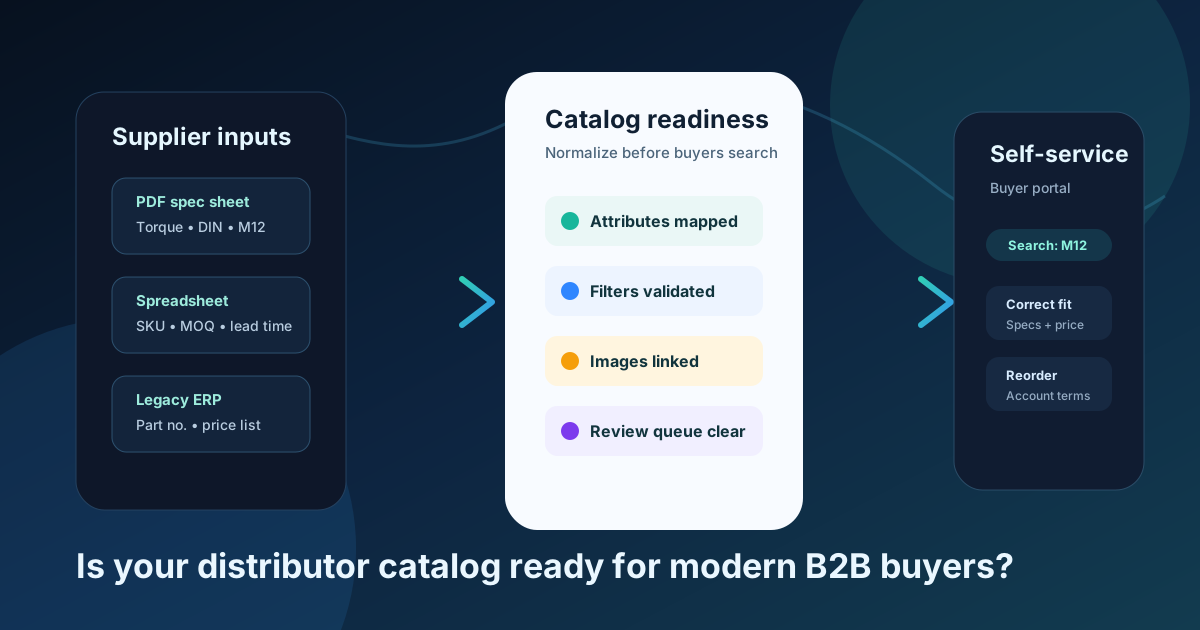
A B2B buyer who can order consumer goods in minutes does not become patient just because the product is a bearing, fastener, spring, seal, tool, or replacement part. They still want to search by the words they know, narrow results by technical attributes, compare alternatives, see account-specific information, and either buy or request a quote without waiting for a callback.
That does not mean every distributor needs a fully automated ecommerce channel overnight. It does mean the catalog can no longer be treated as a static list of SKUs exported from the ERP. Modern self-service depends on product data that is complete enough for buyers to make progress and controlled enough for sales, operations, and product teams to trust it.
Recent B2B ecommerce research points in the same direction: online buying is growing, buyers are comfortable with higher-value digital transactions, and sellers are investing more in ecommerce because customers expect speed, transparency, and self-service. For industrial distributors, the question is whether the catalog is ready to support those expectations.
Skim this first
Self-service starts with product discovery, not checkout.
ERP titles and supplier PDFs are rarely enough for buyer confidence.
The fastest fix is a narrow, measured product-family pilot.
Best first move
Pick one product family with repeated questions or quote delays.
Define the buyer-facing fields that should become filters or comparison data.
Extract, review, and publish only the rows that reach a trusted standard.
Self-service starts before checkout
Many distributor ecommerce projects focus on the transaction: pricing, inventory, payment terms, approvals, tax, freight, and ERP integration. Those matter. But a buyer cannot reach checkout if they cannot identify the right product first. In technical categories, catalog readiness is the difference between a useful portal and a search box that creates more phone calls.
A buyer may begin with a supplier part number, an old invoice line, a dimension, a standard, a material, a load rating, or a problem description. If the catalog only contains a short ERP title and a PDF attachment, the buyer is forced back into email. If it contains normalized attributes, searchable descriptions, clear product families, and source-backed specifications, the buyer can narrow the choice with confidence.
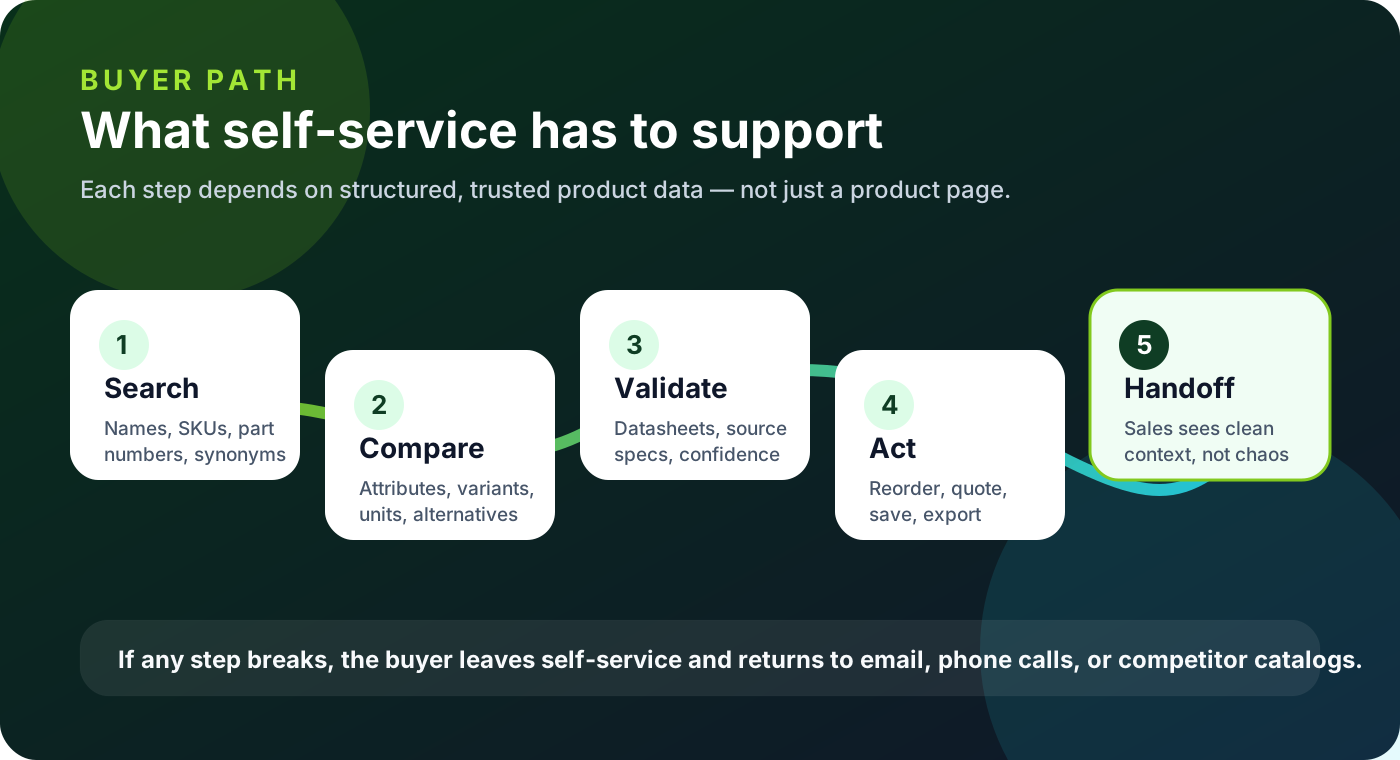
This is why catalog readiness is bigger than product pages. A buyer may start with search, but the journey only works when every step has enough structured data to keep momentum.
The catalog signals buyers notice immediately
Buyers rarely say “your product attribute model is weak.” They say the site is hard to use, search does not work, or they cannot tell which item fits. The underlying causes are usually visible in the catalog.
Search results depend on exact supplier wording instead of common buyer language, abbreviations, and alternate part numbers.
Filters are missing, too broad, or filled with inconsistent values such as mixed units, duplicate materials, and supplier-specific terms.
Product titles are either too short to be useful or overloaded with unstructured specs that should be separate attributes.
Descriptions repeat generic marketing text while omitting dimensions, standards, compatibility, tolerances, or use-case context.
Images, datasheets, certificates, and safety documents are disconnected from the item or buried in inconsistent file names.
Variant relationships are unclear, so buyers cannot move from one size, finish, length, or pack quantity to another.
If sales is still answering basic product-fit questions after the portal launches, that is usually a catalog-data signal — not a sales-process failure.
Each issue adds friction. Some buyers will call sales. Others will leave and search a marketplace, manufacturer site, or competitor catalog that gives them more confidence.
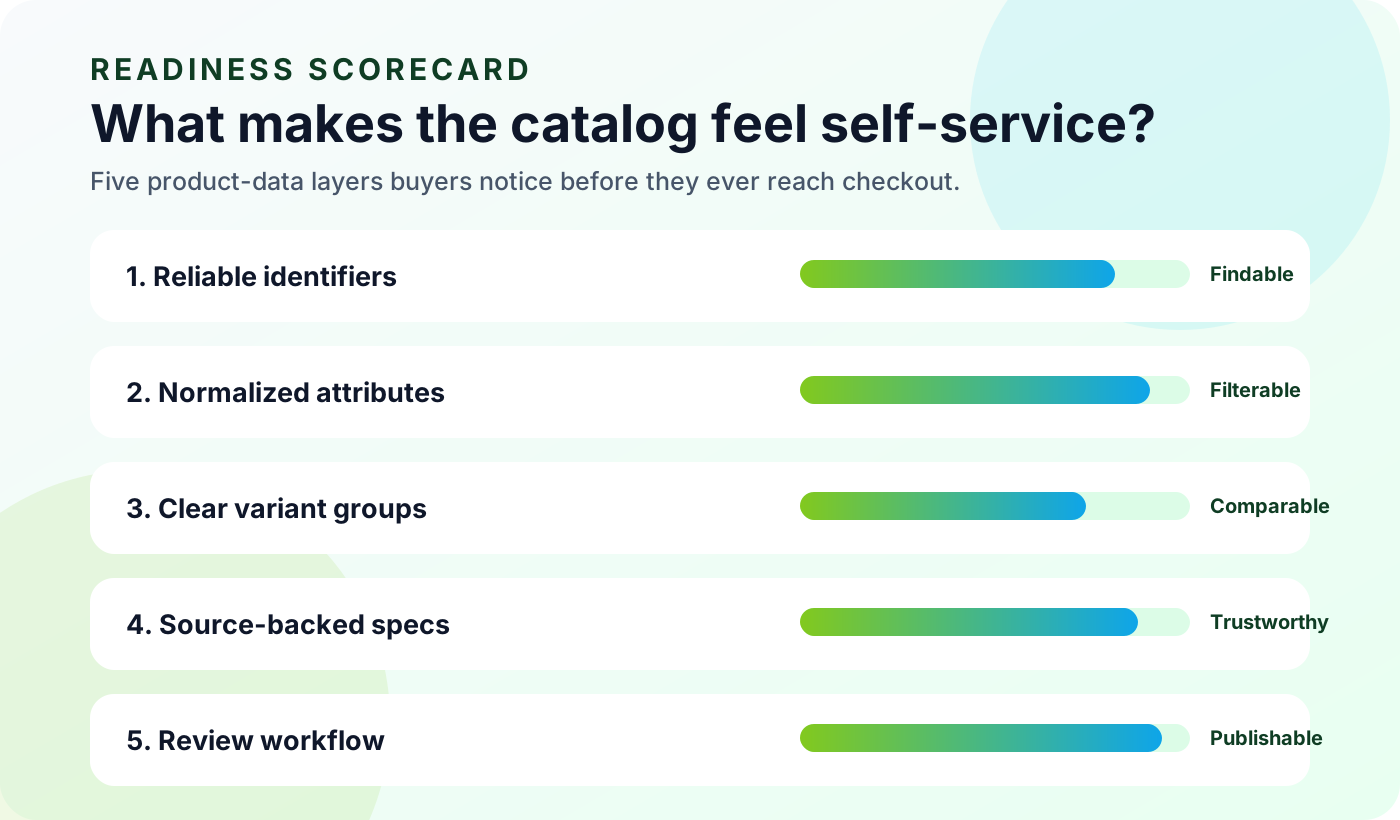
Use this scorecard as a quick way to spot where the buyer experience breaks: identifiers help buyers find products, attributes make products filterable, variant groups make alternatives comparable, source-backed specs build trust, and review workflow makes the data safe to publish.
What a self-service-ready distributor catalog contains
A useful catalog does not need to be perfect everywhere on day one. It does need a repeatable standard for the product families that matter most. Start with four layers.
First, identifiers should be reliable. Supplier part numbers, internal SKUs, manufacturer names, GTINs where relevant, legacy numbers, and customer-specific references should be consistently stored and searchable. Buyers often arrive with whichever identifier their purchasing system, maintenance team, or previous order contains.
Second, the attribute model should match how buyers compare products. A fastener family might need thread size, length, drive type, head style, material, finish, grade, standard, and pack quantity. A spring family might need outside diameter, wire diameter, free length, rate, load, material, end type, and operating environment. Fields needed for filters, comparison, validation, or export should not be trapped inside descriptions.
Third, product pages should explain enough to support a decision: clear titles, concise descriptions, technical attributes, compatible documents, product images or diagrams when available, and links to related products. Fourth, the catalog needs a review workflow so uncertain fields, conflicts, missing values, and high-risk attributes are checked before publishing.
A self-service catalog is not finished when products are online. It is finished when buyers can find, compare, trust, and act without asking sales to translate the data for them.
Why ERP data alone is rarely enough
The ERP is usually the system of record for pricing, stock, orders, customers, and core item numbers. It is not usually designed to be the complete source of ecommerce discovery. ERP item descriptions were often written for internal users, invoices, warehouse labels, or sales reps who already know the category.
That gap becomes obvious in self-service. Ecommerce platforms such as Shopify, BigCommerce, and Adobe Commerce need clean product handles, category assignments, option structures, metafields or custom attributes, media links, SEO-friendly descriptions, and filterable values. The right approach is not to replace the ERP. It is to create a product data layer between supplier inputs, ERP records, and the ecommerce channel.
A practical catalog readiness checklist
Before launching or expanding self-service, pick one high-value product family and answer these questions honestly:
Can buyers find products using supplier numbers, internal SKUs, common names, abbreviations, and important technical terms?
Are the most important comparison fields stored as attributes rather than buried in PDFs or descriptions?
Do filters use normalized units and controlled values, or do they reflect every supplier spreadsheet exactly as received?
Can a reviewer trace important specifications back to the supplier document, datasheet, or spreadsheet they came from?
Are variants grouped in a way that helps buyers choose size, material, finish, pack, or configuration without opening dozens of pages?
Does the product page answer the buyer’s next question: fit, compatibility, standard, availability, document, quote path, or reorder path?
Is there a staging step before data reaches Shopify, BigCommerce, Adobe Commerce, a PIM, or the live catalog?
What buyers want
Search that understands part numbers, product names, abbreviations, and practical buyer language.
Filters that match real comparison fields instead of every supplier spreadsheet variation.
Product pages that make it clear what fits, what differs, and what to do next.
What catalog teams need
A staging workflow before messy supplier data reaches the live ecommerce catalog.
Source-backed review so uncertain specs are checked rather than blindly published.
Export-ready fields for Shopify, BigCommerce, Adobe Commerce, PIM, or ERP staging.
How to improve readiness without boiling the ocean
The safest improvement plan is narrow and repeatable. Start with a product family where demand is strong, the manual workload is visible, and the supplier documents are representative of the wider catalog. Define the fields buyers need, extract them from source documents, normalize values, review exceptions, and export a staging table before touching the live ecommerce platform.
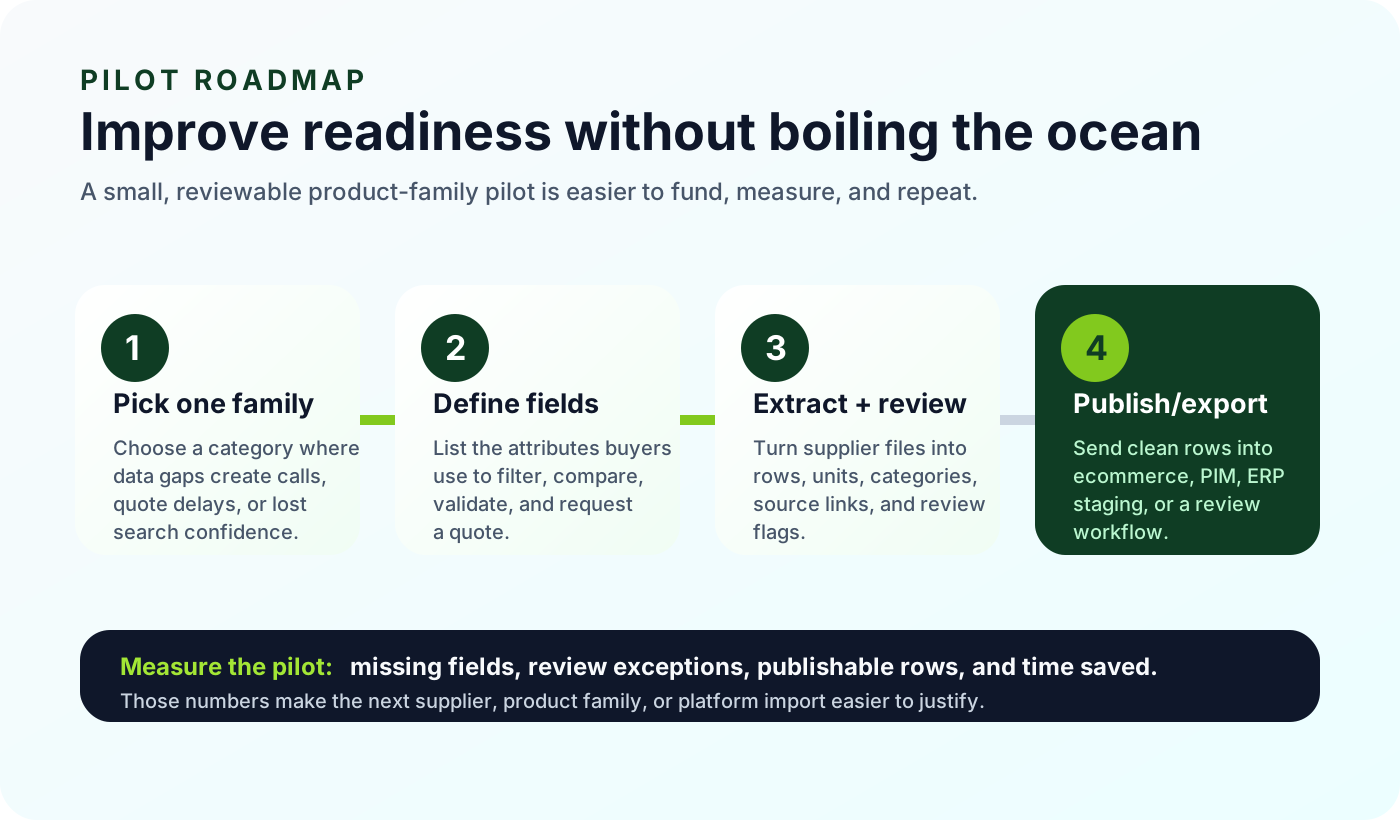
The roadmap keeps the work practical: choose a narrow scope, agree on the fields buyers need, extract and review supplier data, then publish or export only what is ready.
This gives the team something concrete to measure: search coverage, missing attribute rate, products reviewed per hour, import error rate, quote questions reduced, and the number of product pages that can support a buyer without a manual lookup. It also prevents the common relaunch problem where thousands of SKUs move into a new storefront with the same weak data.
Arovon is built for this middle layer: supplier PDFs, spreadsheets, and catalog pages go in; structured product data, review queues, and ecommerce-ready outputs come out. If your team is preparing a self-service portal, a Shopify or BigCommerce build, or a product data cleanup before relaunch, see how Arovon turns supplier documents into usable product data or request a demo to review a sample product family. You can also compare scope on the pricing page or contact the team with a specific catalog challenge.
The bottom line
B2B self-service is not only a website feature. It is a product data capability. Buyers can only serve themselves when the catalog gives them the confidence to search, filter, compare, quote, order, and reorder. Distributors that invest in structured, source-backed product data now will be better prepared for ecommerce growth, marketplace pressure, and the next generation of AI-assisted buying experiences.