ERP Data Is Not Enough for Ecommerce: What Distributors Need Between ERP and Web Store
6/16/2026
ERP data is essential for operations, but most distributors need a product data layer before records are ready for ecommerce search, filters, variants, and buyer self-service.
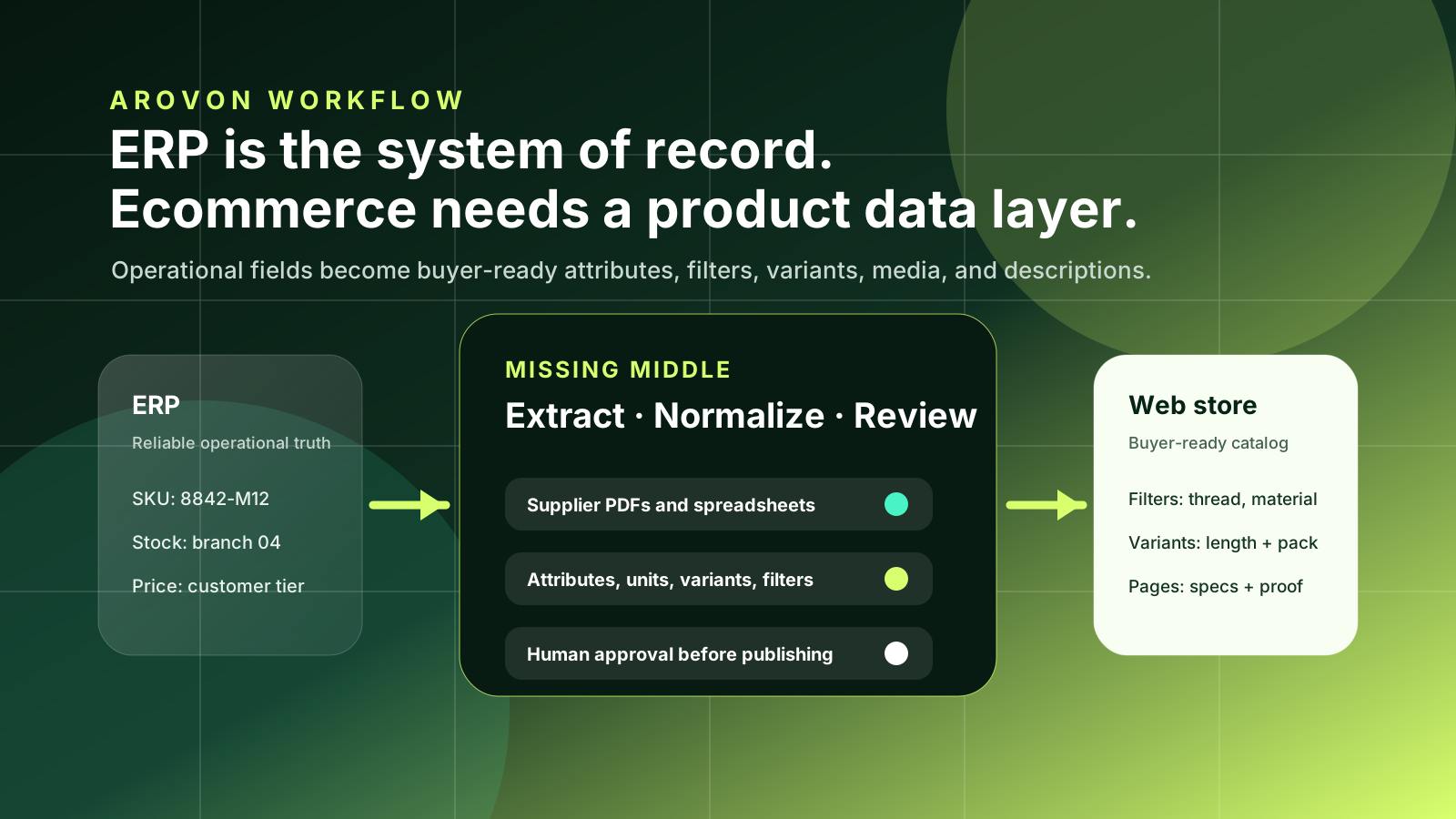
ERP is the backbone of a distributor operation. It knows item numbers, stock position, customer-specific pricing, purchasing rules, warehouse logic, and order history. That makes it indispensable. It does not automatically make it a good source for a modern ecommerce catalog.
The gap appears when a buyer tries to search, compare, filter, and trust a technical product online without calling sales. ERP fields that work perfectly inside operations are often too sparse, too coded, or too inconsistent for web-store discovery. A line item may be sellable, priced, and available, but still missing the attributes, descriptions, images, variants, and source-backed specifications that help a customer choose the right part.
This is why distributors should treat ecommerce product data as a workflow between ERP and the storefront, not as a one-time export. The web store needs operational truth from ERP, but it also needs a product data layer that turns supplier documents, internal knowledge, and category rules into buyer-ready content.
Quick skim: where ERP stops and ecommerce starts
ERP is still essential
Use ERP for SKU identity, inventory, price logic, customer terms, order status, and the controls that keep operations accurate.
The missing middle
Add extraction, normalization, review, and enrichment before records become publishable ecommerce product data.
The buyer outcome
Searchable filters, clean variants, credible specifications, and product pages that reduce calls, rework, and abandoned self-service sessions.
ERP data is built for transactions, not product discovery
Most ERP systems were selected to run the business. They are excellent at questions such as: can we sell this item, where is it stocked, what does this customer pay, and how should the order be fulfilled? Those questions matter more than ever in B2B ecommerce, especially when buyers expect accurate availability and contract-specific pricing.
But ecommerce asks a different set of questions. A buyer may not know your internal SKU. They may search by application, material, size range, finish, thread type, load rating, pressure class, temperature range, or an old supplier part number. They may need to compare alternatives quickly. They may need enough evidence to place a repeat order without waiting for a sales rep.
An ERP record often contains fragments of that answer, but not in the shape the web store needs. Some attributes may live in a description field. Some may be embedded in supplier PDFs. Some may be known by sales or customer service but never modeled as structured data. Some may be present for one supplier and missing for another. Exporting that directly to Shopify, BigCommerce, Adobe Commerce, or a B2B portal simply moves the mess into a more visible place.
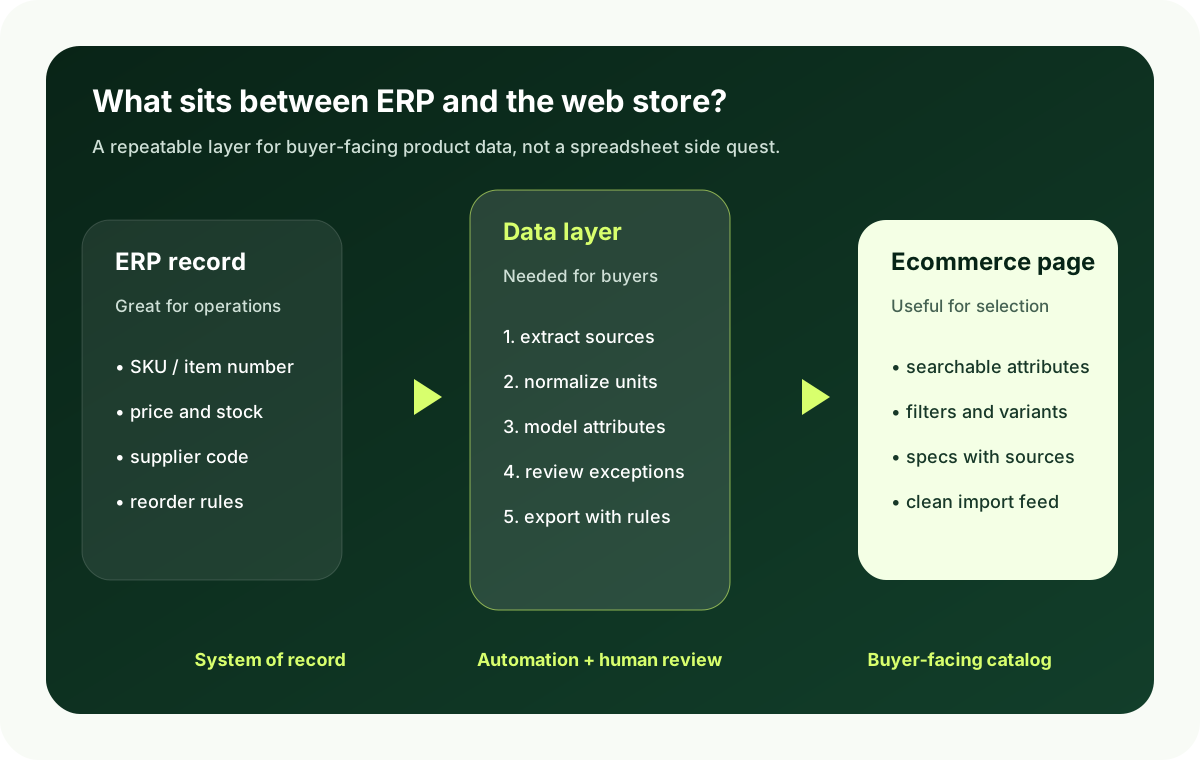
What distributors need between ERP and the web store
The practical answer is not to replace ERP. It is to add a repeatable product data preparation layer. That layer should accept ERP records as one input, combine them with supplier catalogs, PDF datasheets, spreadsheets, images, and internal rules, then produce data that is safe for ecommerce publishing.
A useful middle layer normally includes four capabilities. First, source capture: supplier PDFs, spreadsheets, and catalog pages must be brought into a workflow instead of handled as email attachments and ad hoc spreadsheets. Second, normalization: units, naming conventions, option values, and identifiers need consistent rules. Third, attribute modeling: the distributor decides which fields become filters, variants, comparison points, or descriptive copy. Fourth, human review: exceptions and high-risk technical values need approval before the data reaches customers.
The goal is not to make ERP less important. The goal is to stop asking ERP to carry buyer-facing context it was never designed to manage.
A simple scorecard for ecommerce-ready product data
Operational truth
SKU identity is stable and mapped to supplier references.
Inventory, pricing, and customer rules stay controlled by ERP.
Exports do not create duplicate or conflicting items.
Buyer usability
Attributes match how buyers search and compare products.
Variant options are clear enough to prevent wrong selections.
Specifications can be traced back to supplier or internal sources.
This scorecard keeps the conversation balanced. Operations teams are right to protect ERP as the system of record. Ecommerce teams are right to ask for richer product pages. The distributor wins when both needs are handled deliberately instead of fighting over a single export file.
Common failure patterns when ERP is treated as the catalog
The first failure pattern is the “description field trap.” A product title or long description becomes the place where every missing attribute gets stuffed. That may look acceptable in a table view, but it gives the ecommerce platform little structure for filters, comparison tables, search relevance, or variant grouping.
The second is inconsistent supplier logic. One supplier describes stainless steel as “SS,” another as “A2,” another as “304 stainless,” and another uses a product-family code. If those values are pushed downstream unchanged, buyers see noisy filters and internal teams spend time explaining why search results look wrong.
The third is unmanaged exception handling. Technical product data always has edge cases: missing dimensions, legacy part numbers, conflicting units, discontinued options, or values that require engineering review. Without a review workflow, exceptions either block publishing completely or slip into the web store without confidence.
What the middle layer should produce
For most distributors, the output should be a controlled product data package for the ecommerce platform. That package may include a clean title, normalized attributes, category assignment, variant relationships, image references, source notes, SEO-friendly descriptions, and import-ready fields for the target platform. It should also preserve what came from ERP versus what came from supplier documents or internal enrichment.
That distinction matters. A stock value and a buyer-facing attribute should not be governed the same way. Price and availability may update frequently from ERP. Thread size, material, pressure rating, or compatible product family may require source review and less frequent publishing. Treating every field as the same kind of data creates either too much risk or too much manual work.
Do not publish yet when…
Attributes are only embedded in free-text descriptions.
Units are mixed across suppliers or product families.
Variant relationships are unclear or buyer choices overlap.
Critical specs cannot be traced to a source document.
Ready to publish when…
Required filters and attributes are present for the category.
Exceptions have been reviewed by the right owner.
The export matches the target web-store import rules.
Sales and ecommerce agree the product page can answer common buyer questions.
A practical roadmap for distributors
Start with one product family instead of the whole catalog. Choose a category where ecommerce demand is real, supplier documents are available, and sales teams can confirm which attributes buyers use to select products. Map the current ERP fields, supplier sources, and desired storefront fields side by side. Then identify what must be extracted, normalized, reviewed, or written before the first import.
Next, define the minimum publishable model for that family. For fasteners, that might include diameter, thread pitch, length, material, coating, head type, drive type, standards, pack quantity, and compatible applications. For MRO supplies, it may be brand, dimensions, material, rating, compatible equipment, and replacement references. The point is not to create a perfect taxonomy on day one. The point is to make the first ecommerce-ready slice repeatable.
Finally, measure the workflow. Track how many items moved from source documents to reviewed product data, how many exceptions required human decisions, how many fields were accepted by the web-store import, and where sales still had to fill gaps. Those measurements turn product data cleanup from a vague catalog project into an operational improvement program.
Where Arovon fits
Arovon is designed for the work that happens before product data reaches the ecommerce platform. It helps distributor teams turn supplier PDFs, spreadsheets, and existing records into structured product data, review the outputs, and prepare cleaner exports for systems such as Shopify or other commerce workflows. ERP remains the operational source of truth. Arovon helps create the buyer-facing data layer that ERP exports usually cannot provide by themselves.
If your team is planning a web-store relaunch, cleaning supplier catalogs, or trying to reduce manual product data work, start by reviewing one high-value product family. You can request a demo, compare options on the pricing page, or contact Arovon to discuss what should sit between your ERP and ecommerce catalog.