Why Poor Product Data Breaks B2B Self-Service Portals
6/19/2026
B2B self-service portals fail when buyers cannot find, compare, trust, or order products without calling sales. Here is how distributors can fix the product data layer first.
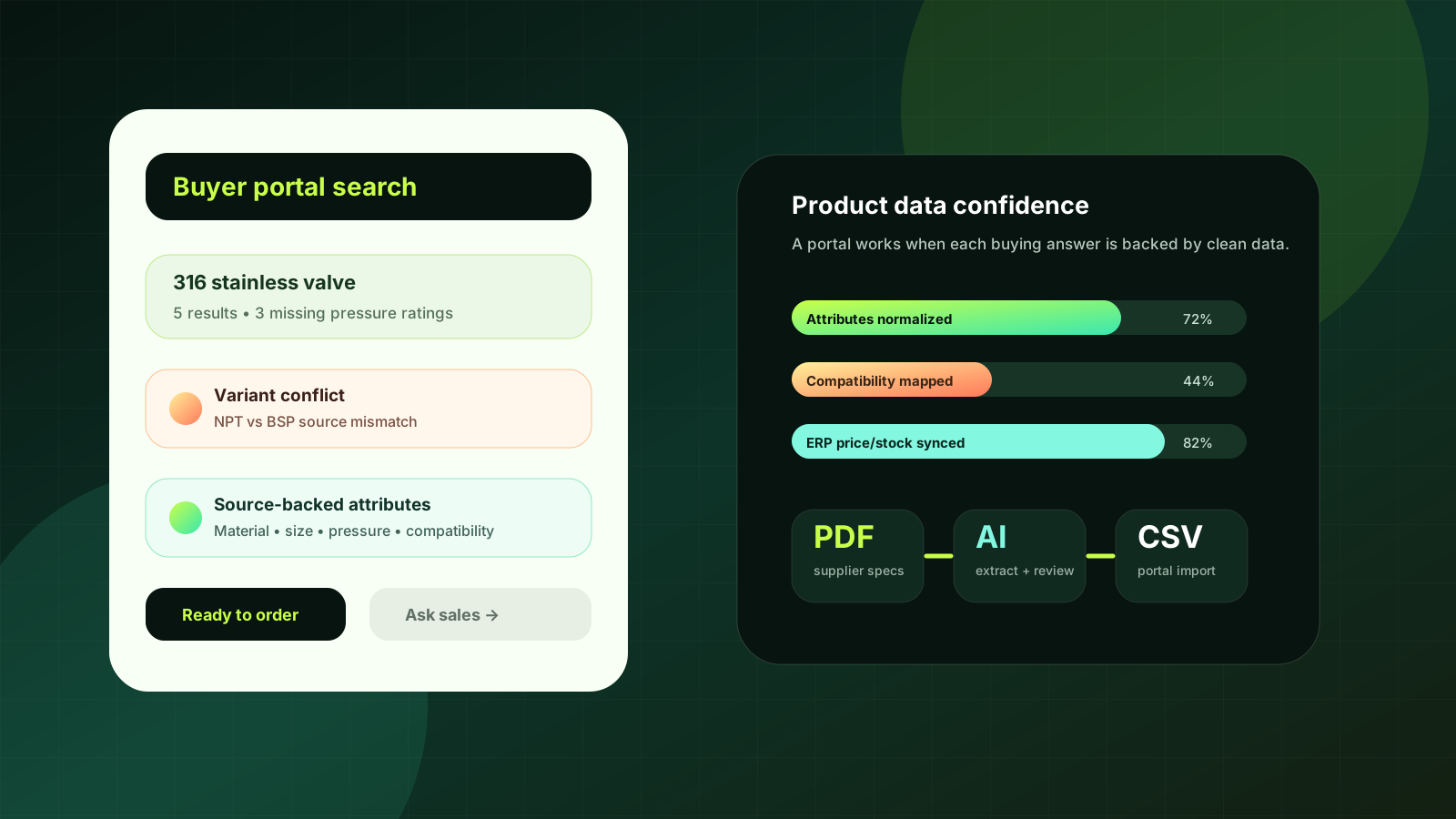
A B2B self-service portal is only as good as the product data underneath it. Buyers may log in for contract pricing, inventory, repeat orders, and quick product research. But the moment they cannot find the right SKU, compare alternatives, or trust a specification, the portal stops being self-service. It becomes a prettier version of the old email-and-phone workflow.
For industrial distributors, this is a common trap. The portal launch gets treated as the digital transformation milestone, while supplier PDFs, spreadsheets, ERP descriptions, and category attributes remain inconsistent. The result is predictable: customers browse for a few minutes, hit uncertainty, and ask a sales rep to confirm what the website should have answered.
The fix is not simply “better content.” It is a product data workflow that turns supplier source material into normalized, reviewed, ecommerce-ready information before the portal has to carry the buying experience.
Quick skim: four data failures that push buyers back to sales
Findability
Part numbers, synonyms, sizes, materials, and units are not normalized, so the right product does not appear in search or filters.
Comparability
Two similar products use different attribute names or missing tolerances, making side-by-side evaluation impossible.
Confidence
The website, ERP, and sales team give different answers about specs, availability, or substitutions.
Order readiness
Critical data for cart, quote, or approval workflows is missing, so the buyer cannot complete the task alone.
Self-service breaks before checkout
Many teams measure self-service by login count, cart starts, or online revenue. Those numbers matter, but they often hide the earlier breakpoints. A buyer may never reach checkout because search failed. They may find a product and still leave because the pressure rating, compatibility note, or pack quantity is unclear. They may add an item to a quote and then call anyway because the portal does not explain whether the displayed product is the current replacement for an older part number.
Current B2B commerce research keeps pointing in the same direction: buyers want to do more independently, but they still expect accurate information and expert guidance when fit matters. Gartner reported in 2025 that many B2B buyers prefer rep-free buying, while also noting buyer frustration when website information conflicts with what sellers provide. For distributors, that conflict is usually a data governance problem, not a sales training problem.
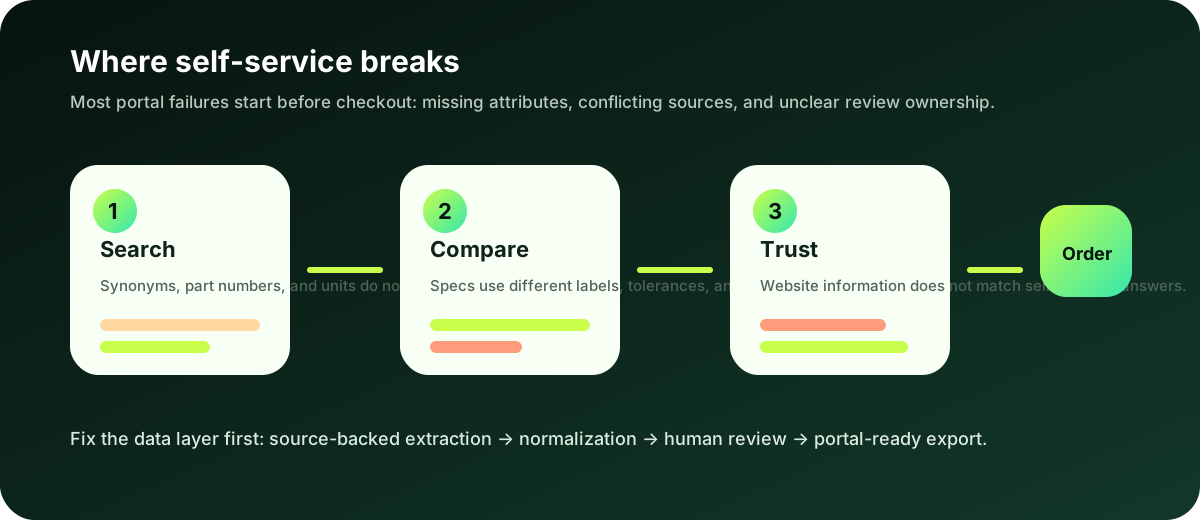
What poor product data looks like inside a portal
Bad portal data rarely appears as one obvious error. It shows up as small frictions that make buyers doubt the experience:
A buyer searches for “stainless hex bolt” but relevant products use “A2,” “18-8,” “SS,” and “stainless steel” inconsistently.
Filters expose internal ERP fields instead of buying criteria, so the category page has “class code” but not thread size, finish, head style, or material grade.
The product detail page has a long supplier description but no structured attributes for comparison or AI-assisted search.
A discontinued item has a replacement note in a PDF, but the ecommerce product page still shows it as a normal purchasable SKU.
Pack quantities, minimum order quantities, and units of measure are written differently across suppliers, creating cart and quote confusion.
Each issue is manageable on its own. Together, they teach customers that the portal is useful for reorders only, not for research, product selection, or confident purchasing.
A self-service portal does not fail because buyers dislike digital buying. It fails when the digital experience cannot answer the operational questions buyers ask every day.
The data layer a self-service portal actually needs
A strong distributor portal needs more than ERP item master data. ERP remains essential for price, inventory, customer rules, order history, and fulfillment. But ecommerce needs an additional layer of buyer-facing product information: normalized attributes, category-specific filters, source-backed specifications, helpful descriptions, images or documents, and relationships between products.
That layer should be built around how buyers make decisions. A maintenance buyer looking for a seal may care about material, inner diameter, outer diameter, cross-section, temperature range, and chemical compatibility. A buyer sourcing fasteners may need thread, length, head style, drive type, grade, coating, pack quantity, and standards. A generic description field cannot carry that work.
ERP-controlled
Customer-specific price
Inventory and lead time
Order rules and credit status
Invoices and order history
Portal-controlled
Search synonyms and categories
Filterable technical attributes
Source-backed specs and descriptions
Substitutes, variants, and compatibility
A practical cleanup workflow
The best approach is to treat product data cleanup as an operating workflow, not a one-time spreadsheet project. Start with the categories where self-service matters most: high-volume reorder families, products that generate repetitive specification questions, or categories that marketing wants to promote through search and paid campaigns.
Collect source material: supplier PDFs, spreadsheets, price files, product pages, ERP exports, and sales-team notes.
Define the attribute model: decide which fields become filters, variants, comparison attributes, descriptions, or internal-only fields. If you need a deeper framework, see Arovon’s guide to product attribute strategy.
Extract and normalize: convert source information into consistent labels, units, values, and naming conventions.
Review exceptions: route low-confidence fields, conflicting values, discontinued items, and compatibility claims to the right product or sales expert.
Export to the portal: publish only approved fields into Shopify, BigCommerce, Adobe Commerce, a PIM, or a custom B2B portal workflow.
Measure buyer behavior: track failed searches, filter use, product-page exits, quote questions, and sales-team corrections.
This is also where automation helps. AI can accelerate extraction from messy supplier documents, but technical product data still needs source references, confidence scoring, and human review. The goal is not blind automation. The goal is faster, safer movement from supplier material to portal-ready data.
A portal readiness scorecard for product data
Before calling a portal “self-service ready,” test a product family against concrete buying tasks:
Pass signals
Buyers can search by synonym, part number, and key attribute.
Important specs are structured, not buried in prose.
Filters match real selection criteria.
Replacement and compatibility notes are clear.
Sales and website information match.
Risk signals
Category pages rely on generic ERP descriptions.
Different suppliers use different units for the same attribute.
Portal fields cannot support comparison tables.
Quotes require manual clarification for common items.
Customers keep emailing screenshots for confirmation.
The point is not perfection across the whole catalog. It is to identify which product families can support a real digital buying journey and which still need data work before they should be promoted as self-service.
Where Arovon fits
Arovon helps distributors turn supplier documents into reviewed product data that can feed ecommerce, PIM, and catalog workflows. The workflow starts with messy source files such as PDFs and spreadsheets, extracts relevant technical fields, normalizes values, flags exceptions for review, and prepares data for export.
That makes it useful before a portal launch, during a category cleanup, or when the sales team is tired of answering the same product-data questions repeatedly. If your team is planning a self-service push and the catalog data is the weak link, review Arovon’s pricing or request a demo to see how a product data workflow could fit into your current stack.
The takeaway
B2B self-service is not just a portal feature set. It is a trust promise. Buyers will use digital tools when those tools make their job easier, faster, and more reliable. Poor product data breaks that promise at the exact moment the buyer needs confidence.
Distributors that fix the data layer first can make their portals more than a login screen. They can support real product discovery, cleaner quoting, fewer repetitive questions, and a sales team that spends more time advising customers instead of correcting catalog gaps.