How to Prepare Industrial Product Data for AI-Powered Ecommerce Search
6/22/2026
AI-powered ecommerce search only works when the underlying product data is structured, normalized, source-backed, and written in the language industrial buyers actually use.
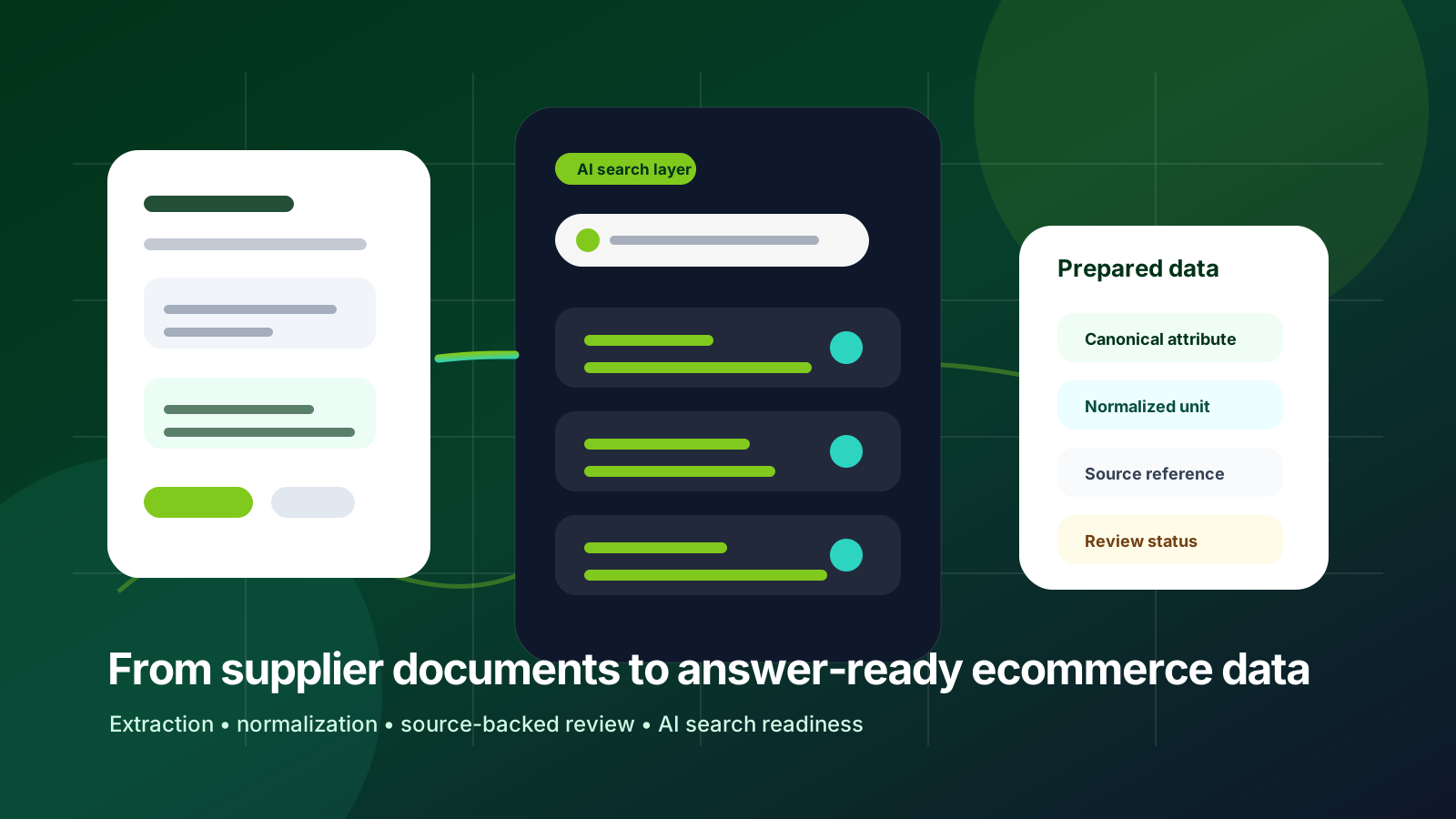
AI-powered ecommerce search sounds like a software feature. In practice, it is a product data readiness problem. If an industrial buyer types “316 stainless hex bolt for washdown area” and your catalog stores the same item as “HHCS SS A4-70 DIN 933,” the search layer needs more than a clever model. It needs normalized attributes, buyer-language synonyms, reliable identifiers, and source-backed specifications it can trust.
That matters because B2B buyers increasingly expect to research and buy without waiting for a rep. Current B2B ecommerce coverage from BigCommerce, Shopify, Sana Commerce, and McKinsey-linked buyer research points in the same direction: buyers want self-service, consistency across channels, and product information that helps them decide quickly. AI search can improve that experience, but only when the catalog below it is understandable.
This guide explains how an industrial distributor can prepare product data before adding AI search, semantic search, or chat-based product discovery to the ecommerce roadmap.
Quick skim: what AI search needs from your catalog
Canonical attributes: the same spec should have one approved field name, not five supplier variations.
Normalized units: values such as 0.25 in, 1/4”, 6.35 mm, and .250 must be comparable.
Synonyms and buyer language: search should understand part numbers, abbreviations, trade names, use cases, and plain-English intent.
Source references: technical claims should trace back to a supplier PDF, spreadsheet, ERP record, or reviewed source.
Review states: high-risk data needs human approval before it influences search results or product recommendations.
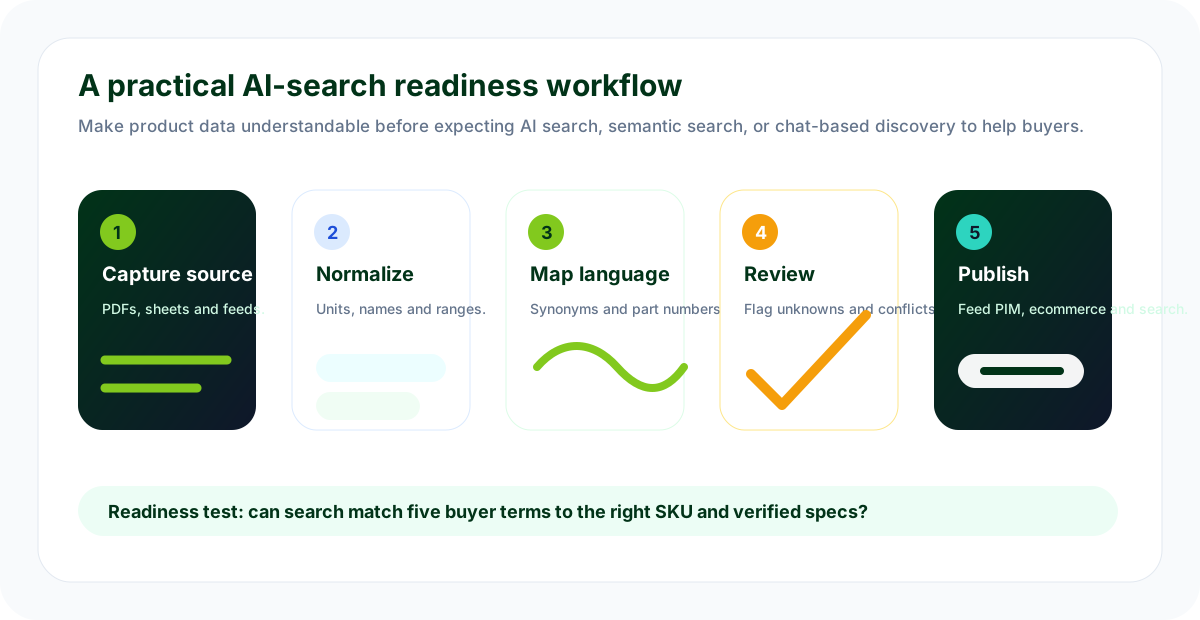
Start with the buyer query, not the AI model
The best preparation exercise is simple: collect the phrases real customers use when they call sales, email support, or search the existing site. Industrial buyers rarely search only one way. They may use a manufacturer part number, a distributor SKU, an application, a standard, a material, a dimension, a problem statement, or a shorthand your internal team recognizes immediately.
AI search can connect those dots only if the catalog contains the dots. Before buying another search layer, build a query map for your top product families: the language buyers use, the fields required to answer those searches, and the source documents where those fields can be verified.
Build a canonical attribute model for each product family
Industrial catalogs break down when every supplier describes the same concept differently. One supplier says “OD,” another says “outside dia.,” another writes “outer diameter,” and a spreadsheet column arrives as “D2.” AI search may recognize some similarities, but ecommerce operations should not depend on guesswork for technical specifications.
Identifiers: manufacturer part number, distributor SKU, GTIN where relevant, supplier name, and superseded numbers.
Fit and dimension fields: thread size, diameter, length, bore, width, tolerance, pressure rating, or other family-specific values.
Material and compliance fields: material grade, coating, standard, certification, food-safe or chemical compatibility claims where relevant.
Ecommerce fields: category, filter eligibility, variant grouping, title components, and product-page description rules.
Operational fields: ERP item number, stock status source, price source, approval status, and last reviewed date.
This is where a platform like Arovon fits naturally: supplier PDFs, spreadsheets, and other documents can be extracted into structured fields, then reviewed before export to ecommerce, PIM, or ERP-adjacent workflows.
AI search should not become a polite way to hide messy product data. It should expose the fact that your catalog is structured enough to answer buyer questions.
Normalize units and values before you index them
Semantic search can help with meaning, but it cannot reliably compare technical products if values are inconsistent. A search result for “10 mm stainless socket screw” should not miss products stored as “M10,” “10mm,” or “0.394 in” when those values are relevant. Likewise, “temperature range” should not mix Celsius, Fahrenheit, text ranges, and supplier notes without a normalization rule.
Approved units per attribute, with conversion rules when your catalog supports multiple markets.
Numeric parsing rules for fractions, ranges, plus/minus values, and supplier formatting quirks.
Controlled vocabularies for materials, coatings, standards, and application tags.
Exceptions for values that should remain as supplier-provided text because conversion would change meaning.
A review queue for records where source values conflict or cannot be confidently parsed.
Create synonym coverage for how buyers actually speak
Industrial buyers often search with shorthand. They may type “SS,” “stainless,” “inox,” “A2,” or “A4” depending on market and product family. They may search a brand term even when they would accept equivalents. They may use an old part number from an ERP history export. AI search can infer intent, but you still need an explicit synonym strategy for high-volume and high-risk terms.
Good synonym candidates
Common abbreviations and spelling variants.
Legacy part numbers and superseded manufacturer numbers.
Application terms used by customers and sales teams.
Material, coating, and standard names that vary by supplier.
Terms to treat carefully
Safety, certification, or compliance claims that require source proof.
Brand substitutions where “equivalent” may not be acceptable.
Dimension terms that look similar but mean different things by product family.
AI-generated descriptions that are not tied to supplier data.
Keep source-backed review in the workflow
AI-powered search can make bad data more visible. If the model confidently surfaces an item because a description says “food grade,” but the claim is not supported by the supplier source, the buyer experience gets worse rather than better. For industrial distributors, trust is part of conversion.
Every important attribute should carry enough context for review: where it came from, when it was extracted, who approved it, and whether it has been changed after the first import. This does not mean every field needs a long audit trail on the public product page. It means your internal workflow should distinguish between source-backed values, inferred values, manually edited values, and values that need review.
Prepare exports for ecommerce, PIM, and search systems
Once the data model is clear, decide where each field should go. Some fields belong in ERP because they drive ordering, pricing, inventory, or tax logic. Some belong in PIM because they support enrichment and channel publishing. Some belong directly in Shopify metafields, BigCommerce custom fields, Adobe Commerce attributes, or a search index.
Buyer-visible: title, category, description, filters, variants, comparable specifications, and verified application tags.
Search-supporting: synonyms, alternate identifiers, normalized values, source confidence, and family-level attribute mappings.
Internal only: source file references, extraction confidence, reviewer notes, exception flags, and rejected values.
This keeps your ecommerce platform cleaner and gives your search system better input without exposing internal workflow fields to customers.
A 30-day pilot plan
The safest way to start is a focused pilot rather than a full-catalog transformation. Choose one product family with meaningful search demand, varied supplier documents, and enough technical complexity to prove the workflow.
Week 1: collect source documents, existing product exports, top site searches, sales-team search terms, and support questions.
Week 2: define the canonical attribute model and normalize the highest-impact fields.
Week 3: extract and review a sample set, resolving conflicts and documenting rules for exceptions.
Week 4: export to a staging environment, test search queries, review result quality with sales, and decide what should scale next.
Where Arovon fits
Arovon helps industrial distributors turn supplier documents into structured, reviewed product data that can be exported into downstream systems. The point is not to replace your ERP, PIM, or ecommerce platform. It is to close the messy gap between supplier PDFs, spreadsheets, catalog pages, and the structured fields modern ecommerce search needs.
If your team is preparing for AI-powered search, start by making the catalog answer-ready: canonical attributes, normalized units, useful synonyms, source-backed review, and clean exports. Then the search layer has something reliable to work with.
Want to see what this could look like for your catalog? Request a demo, review the pricing, or contact Arovon with a sample supplier document and the product family you want to improve first.