Product Data Quality: A Checklist for Distributors
5/20/2026
A practical checklist distributors can use to evaluate product data quality before publishing products, importing CSV files, or sending rows into a PIM.
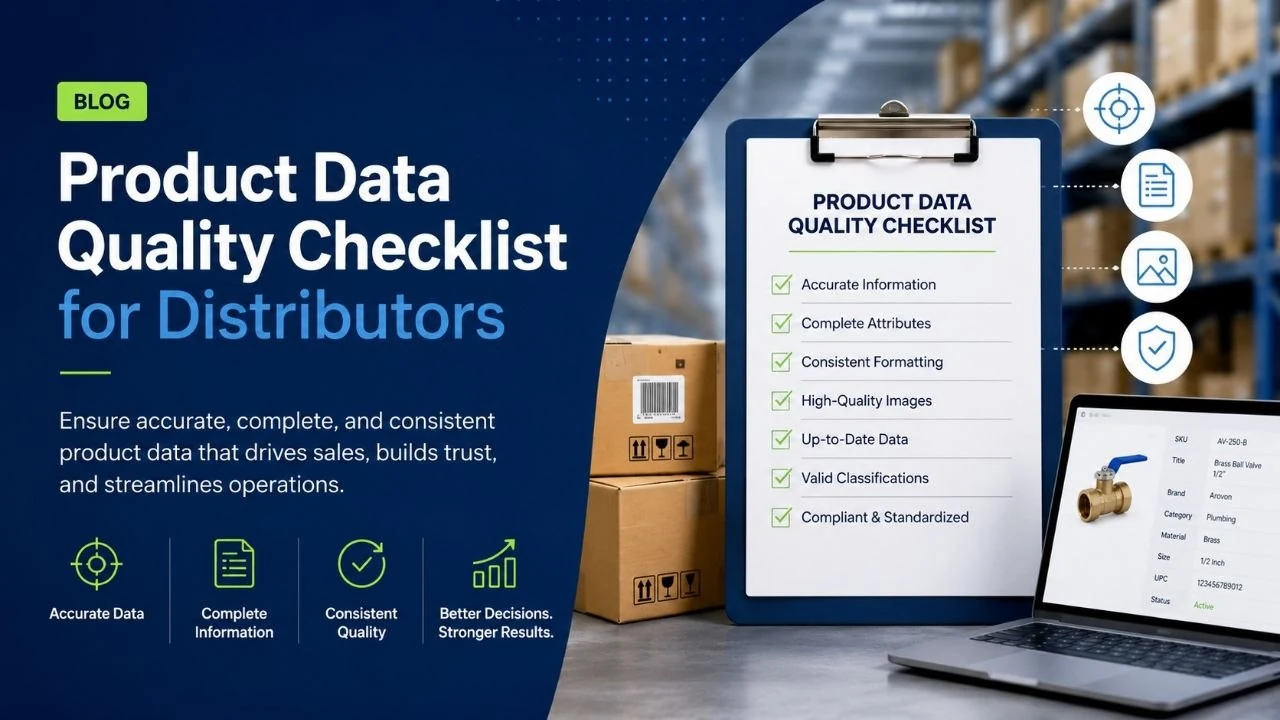
A practical checklist distributors can use to evaluate product data quality before publishing products, importing CSV files, or sending rows into a PIM.
Skim this first
Use this checklist to judge whether catalog data is safe enough for buyers and imports.
Quality issues usually appear as missing units, duplicate values, unclear categories, or weak source evidence.
The point is to prevent bad rows from reaching ecommerce, not to clean them up later.
Best next move
Define required fields for each product family before importing.
Check units, identifiers, variants, and source references before publishing.
Turn recurring problems into review rules for the next supplier file.
For industrial distributors, the practical question is not whether software can read a document once. The question is whether the team can repeat the workflow across suppliers, keep technical values traceable, and export rows that are safe to use.
This guide focuses on product data quality checklist from an operations point of view: what to standardize, what to review, and where automation should support people rather than hide uncertainty.
Quick facts
Quality means: Complete, consistent, sourced, searchable, and approved.
Most common gaps: Missing units, inconsistent names, duplicate SKUs, and weak descriptions.
Best process: Check data before import, not after customers find errors.
A quality checklist is useful only when it catches problems before buyers and import tools see them.
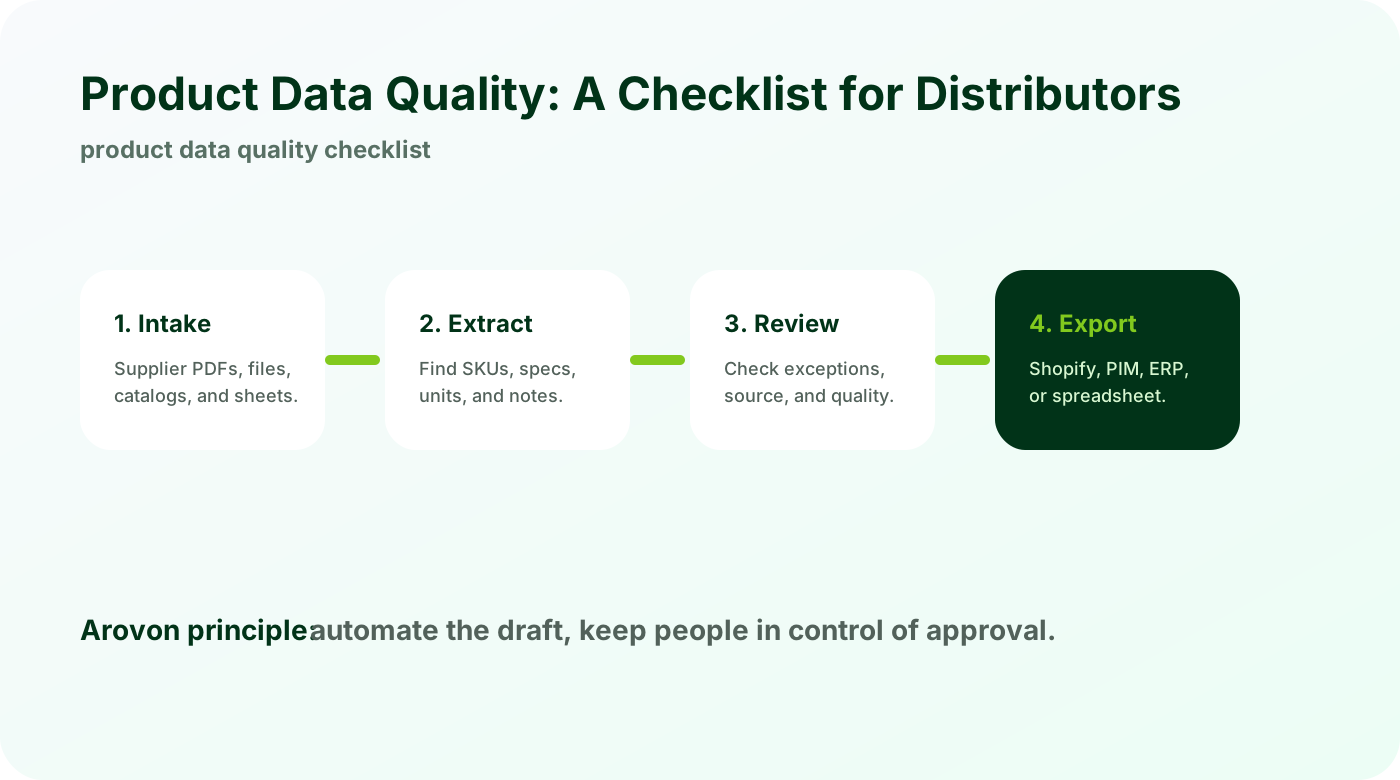
Check completeness by product family
Required fields should depend on what the product is. A generic checklist misses technical details.
List required identifiers, attributes, units, and descriptions.
Check category-specific fields.
Flag rows that are incomplete before export.
Completeness is easier to enforce when the schema matches the product family.
Check consistency across suppliers
Different suppliers use different names for the same concept. Your catalog should not expose that chaos to buyers.
Normalize material and finish names.
Use consistent units and field labels.
Map supplier-specific terms to your internal schema.
Consistency improves search, filtering, and buyer trust.
Check source and approval status
A product row should show where it came from and whether someone approved it.
Keep supplier document and page references.
Track review status.
Record exceptions and unresolved fields.
Source and approval data make quality visible instead of relying on memory.
Checklist
Required fields are complete.
Units are present and consistent.
SKUs and handles are unique.
Descriptions and specs match the source.
Rows have review status and source references.
Watch for
Attributes that use mixed units or supplier-specific abbreviations.
Rows with no source reference for critical technical values.
Duplicate products created by inconsistent SKUs or variant naming.
Make it repeatable
Create a review gate for high-risk fields.
Track which checks fail most often by supplier or category.
Feed those failures back into the extraction and mapping rules.
Use quality checks before export
Arovon helps distributor teams turn supplier documents into validated rows that are easier to trust and import.