What Is Product Data Automation? A Guide for Industrial Distributors
5/23/2026
A plain-English guide to product data automation: what it does, where it fits, what it does not replace, and how distributors should evaluate it.
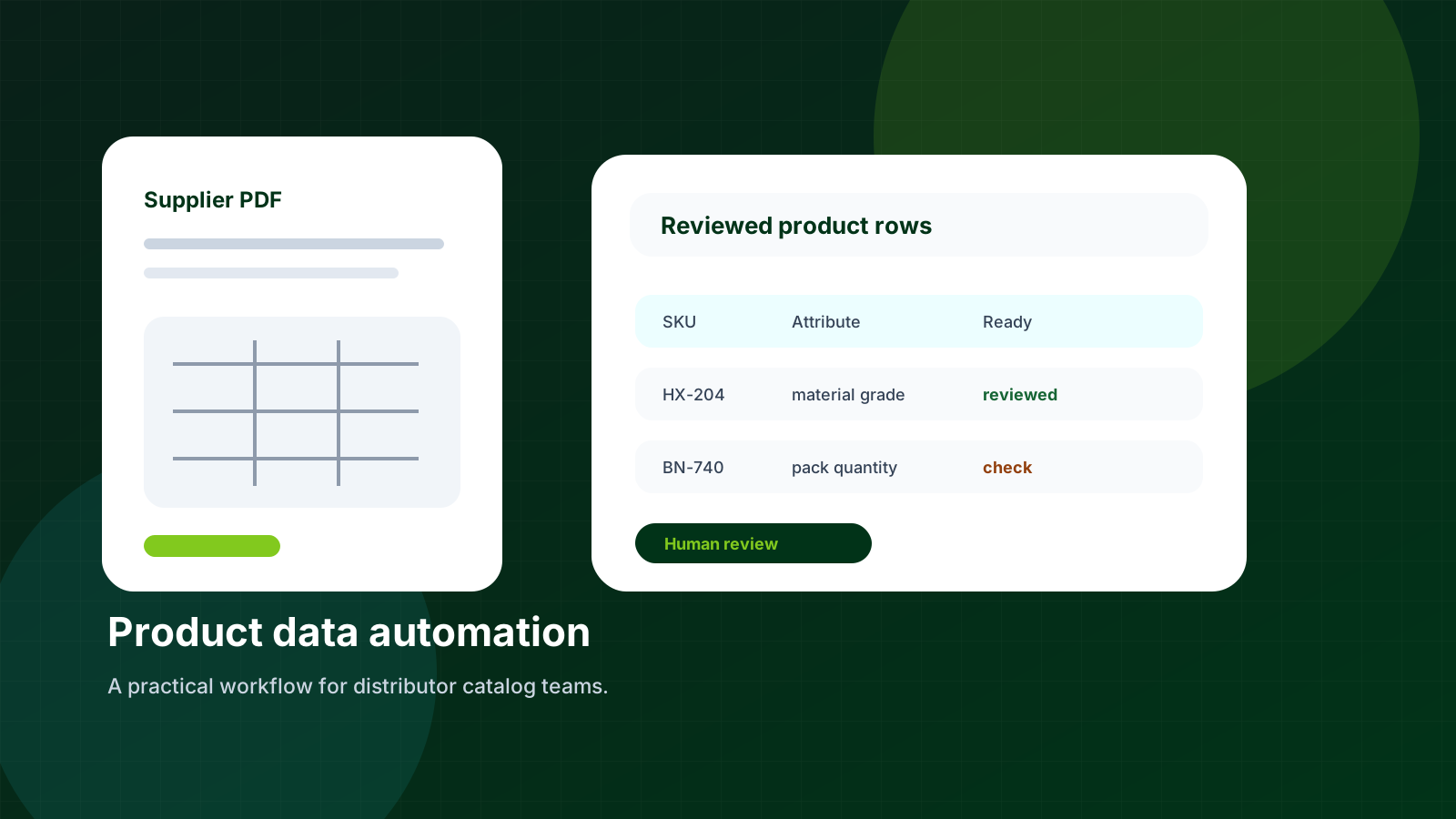
Product data automation is software that turns messy supplier information into usable catalog data. For distributors, that usually means reading PDFs, datasheets, spreadsheets, and catalog pages, then producing reviewed rows that can be sent to ecommerce, a PIM, or an ERP staging process.
Skim this first
Use this article as a practical lens for what is product data automation? a guide for industrial distributors.
Look for the exact place where supplier data stops being useful to buyers.
The goal is cleaner decisions, not just more catalog text.
Best next move
Start with one supplier file or product family.
Define which fields must become searchable, comparable, or reviewable.
Export only rows that are clear enough for the receiving system.
It is not magic, and it should not remove people from the process. The point is to stop skilled staff from doing the first draft by hand. People should review exceptions, make category decisions, and approve the rows that matter.
A good setup gives the team a repeatable workflow: intake, extraction, normalization, review, and export. That sounds simple, but it changes the pace of catalog work.
Quick facts
Best use case: High-volume supplier documents with repeated product patterns.
Human role: Review exceptions, approve fields, and improve rules over time.
Output: Clean rows for Shopify, PIM, ERP staging, or spreadsheets.
Good catalog work turns supplier material into buyer confidence, one reviewed field at a time.
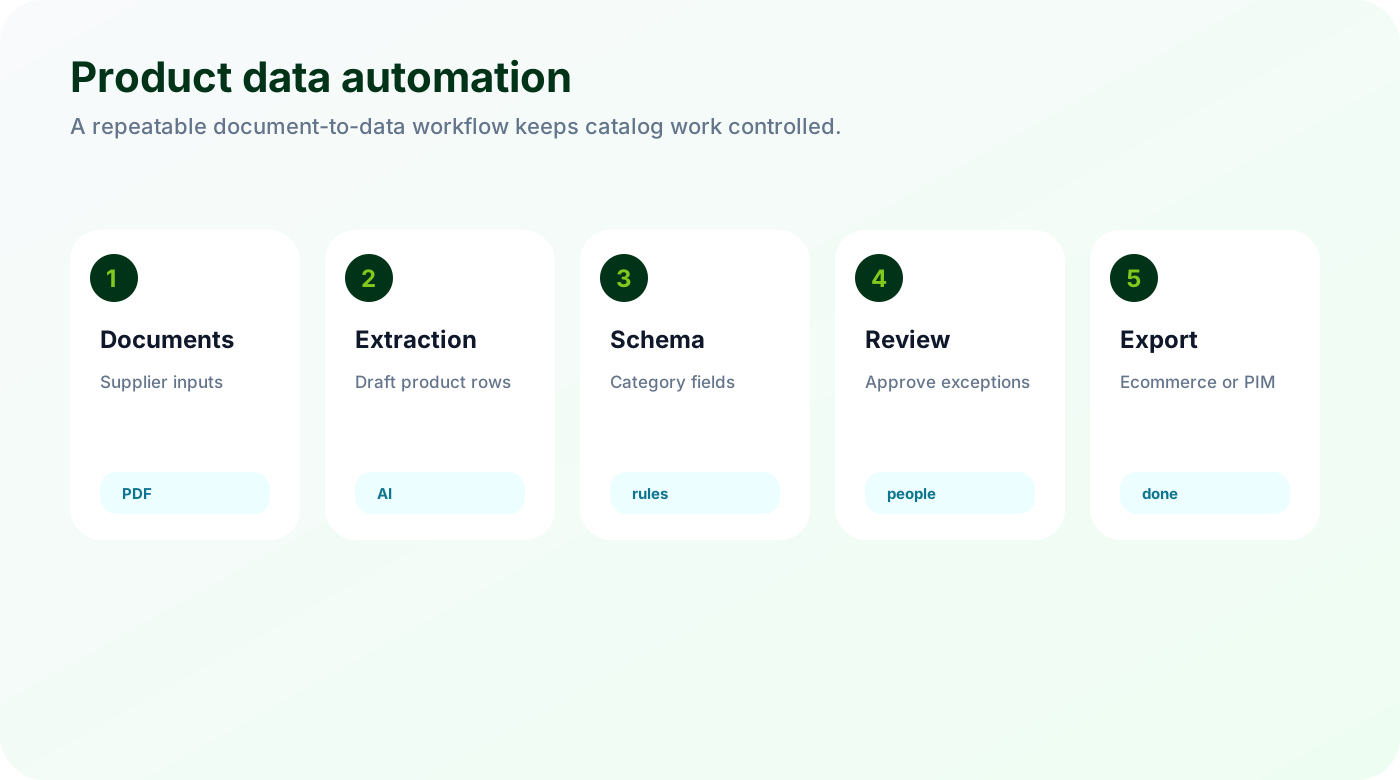
What product data automation does
Product data automation handles the repetitive parts of catalog preparation. It creates a structured draft from documents that were never meant to be imported.
Reads supplier documents and finds product records.
Extracts attributes, descriptions, identifiers, and units.
Normalizes field names into the distributor catalog schema.
Flags low-confidence or incomplete rows for review.
The system should give you a structured draft. Your team still decides how the data should appear in the catalog and what quality standard is acceptable.
What it should not pretend to do
Automation should be honest about uncertainty. Technical product data needs checks, especially when a value affects fit, safety, or compatibility.
It should not publish technical values without review.
It should not hide low-confidence fields.
It should not force every supplier into one generic schema.
Industrial catalogs have real consequences. If a dimension, material, or rating is wrong, a buyer can order the wrong product. Automation should make review easier, not invisible.
Where it fits in a distributor operation
The workflow sits between supplier intake and the systems that publish or store product data. It gives your team cleaner rows before ecommerce or PIM work begins.
Supplier onboarding.
Catalog expansion.
Ecommerce migration.
PIM cleanup.
Shopify CSV preparation.
The best projects start with a narrow scope. Pick one supplier or one product family, process the documents, and measure how much manual work disappears.
Checklist
Use category-specific schemas.
Keep humans in the review loop.
Track source pages and confidence.
Export to the system your team already uses.
Measure time saved per SKU.
Watch for
Unclear units or names that make products hard to compare.
Review work hidden in spreadsheets, emails, or repeated manual checks.
Fields that should power filters but remain trapped in prose.
Make it repeatable
Keep source evidence visible for every important value.
Separate clean rows from rows that need expert review.
Use the first pass as a repeatable template, not a one-off cleanup.
See what automation would change in your catalog process
Arovon can process a sample supplier document so your team can compare the extracted draft against your current manual workflow.