How to Clean Product Titles for Industrial Ecommerce
7/17/2026
Industrial product titles should help buyers recognize the right item quickly without carrying the whole catalog record. Here is a practical cleanup workflow for distributor ecommerce teams.
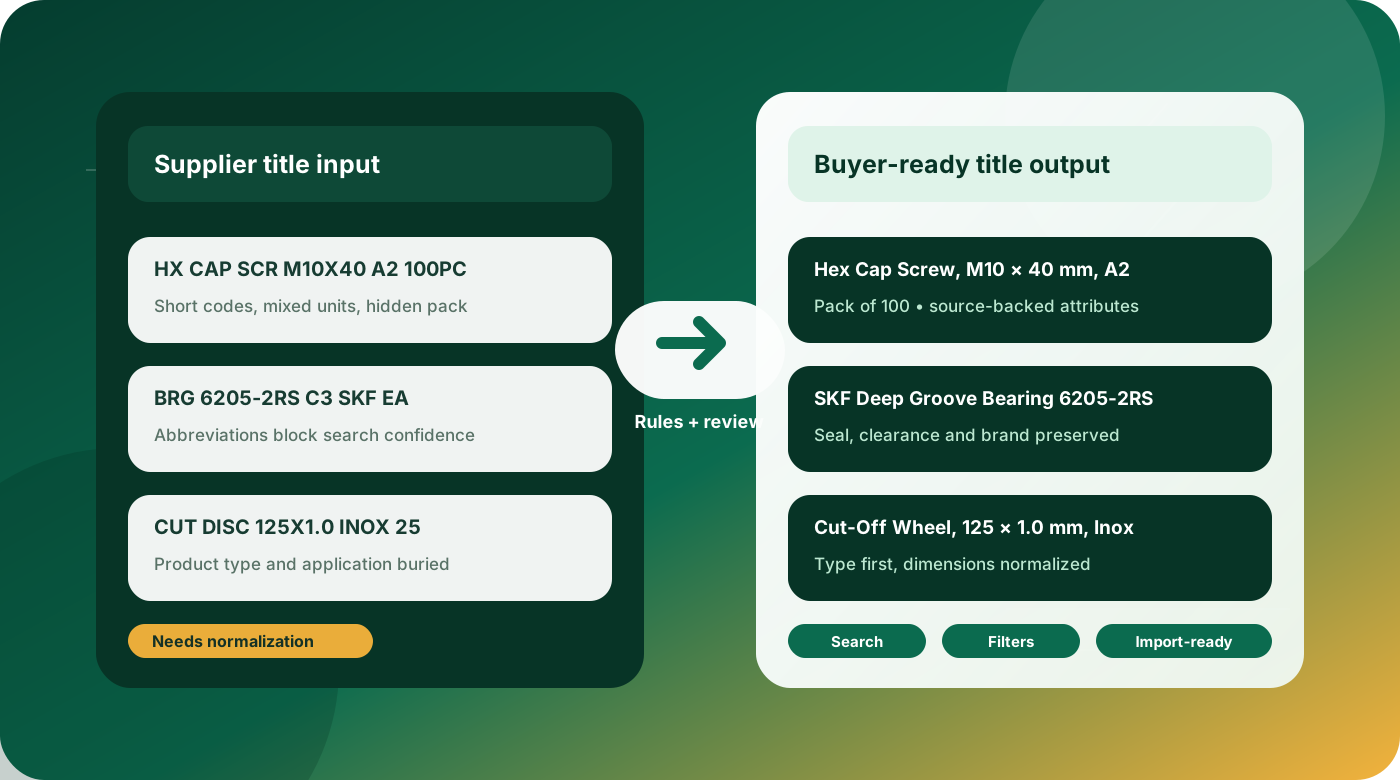
Product titles do more work in industrial ecommerce than many teams realize. They appear in search results, category grids, quotes, order history, punchout catalogs, marketplace feeds, internal exports, and customer service conversations. When titles are copied directly from supplier spreadsheets or ERP descriptions, they often carry abbreviations, inconsistent units, brand codes, pack details, and legacy shorthand that only an experienced inside-sales person understands.
Cleaning titles does not mean turning every product name into marketing copy. In B2B catalogs, a good title helps a buyer recognize the right item quickly, while the structured attributes carry the deeper technical detail. That balance matters for fasteners, bearings, seals, cutting tools, consumables, electrical parts, MRO items, and any catalog where small specification differences change fit, compliance, or reorder confidence.
This guide gives ecommerce managers, catalog teams, operations leads, and distributor owners a practical way to clean industrial product titles without losing source-backed accuracy.
Quick skim: what a clean title should do
Put the product type first so buyers and search systems know what the item is.
Include only the most important differentiators, such as size, material, brand, series, standard, grade, or pack quantity when those facts affect choice.
Move detailed specs into normalized attributes instead of stuffing every value into the title.
Use category-specific title patterns so similar products appear consistently across suppliers.
Preserve source facts and review uncertain values before titles reach Shopify, BigCommerce, Adobe Commerce, a PIM, or a customer portal.
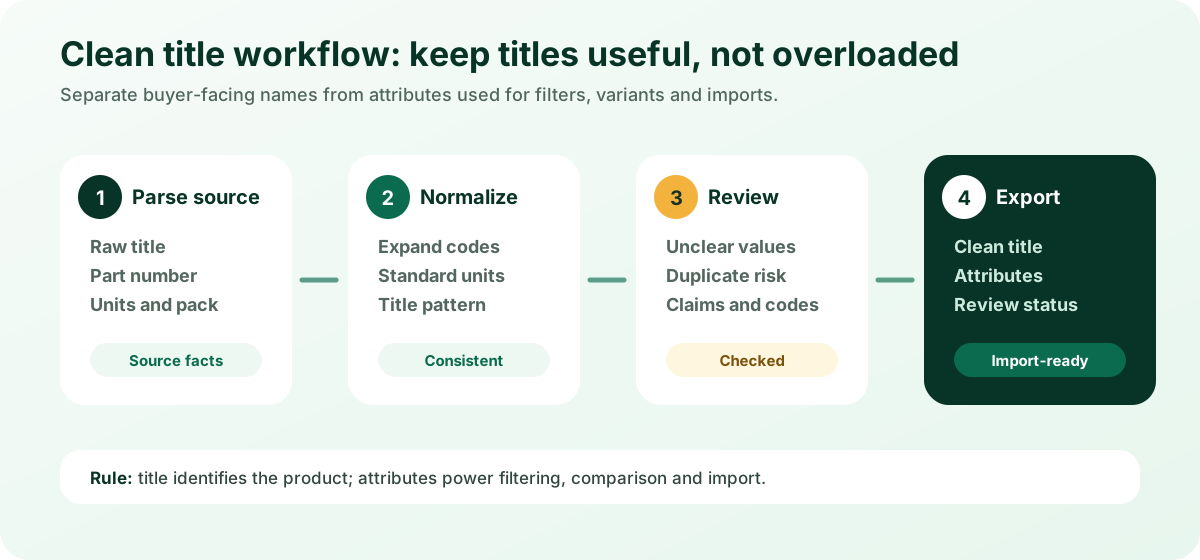
Start by separating title work from attribute work
The biggest mistake is asking the product title to carry the entire product record. A supplier title such as “HX CAP SCR M10X40 A2 100PC” contains useful facts, but it is not a good ecommerce title on its own. It mixes shorthand product type, dimensions, material, and pack quantity into a compressed string. A buyer may understand it eventually, but the storefront, filters, and comparison experience will be weaker than they need to be.
A better approach is to parse the supplier title into separate fields first. Product type becomes “Hex Cap Screw.” Diameter becomes M10. Length becomes 40 mm. Material or grade becomes A2 stainless steel if the source supports that interpretation. Pack quantity becomes 100 pieces. The final title can then use the most important facts, while filters, variant logic, and imports use structured values.
This is also safer for AI-assisted or semantic search. Search tools work better when the title is clear and the attributes are consistent. They struggle when every supplier compresses the same product family differently.
Build title patterns by product family
Industrial catalogs need title rules that respect product families. A bearing title should not follow the same pattern as an abrasive disc, a hydraulic seal, or a drill bit. Each category has different decision criteria.
Fasteners: product type, thread or diameter, length, material or grade, head or drive where relevant, pack quantity if it affects purchase choice.
Bearings: brand or manufacturer, bearing type, series or part number, dimensions or seal/shield details where useful, clearance if it is a core differentiator.
Seals and O-rings: seal type, dimensions, material or compound, hardness or standard when buyer selection depends on it.
Cutting tools: tool type, diameter, length or flute count, material, coating, application, shank or connection when relevant.
Consumables: product type, size, material, grit or grade, application, pack or unit of measure.
The goal is not to make every title long. The goal is to create a predictable order. When similar items appear in a category grid, buyers should be able to scan the differences rather than decode a new naming convention on every row.
Keep in the title
Product type and category identity
Primary size, standard, material, grade, series, or brand when it affects selection
Pack quantity when the buyer would otherwise misunderstand the item
Terms customers actually use in search and reorder workflows
Move to attributes
Long specification lists that belong in filters or tables
Internal ERP codes that do not help customers identify the item
Repeated supplier boilerplate, marketing phrases, and vague claims
Values that are uncertain, conflicting, or not backed by the source file
Normalize abbreviations before rewriting
Supplier data is full of abbreviations: “SS,” “INOX,” “BRG,” “EA,” “PK,” “OD,” “ID,” “C/S,” “2RS,” and hundreds of category-specific codes. Some should be expanded for readability. Others are meaningful product codes that must be preserved. Cleaning titles requires a controlled vocabulary, not a blanket find-and-replace.
For example, “2RS” in a bearing title often carries important seal information and should not be casually rewritten into a generic phrase if the exact suffix matters. “EA” may be a unit of measure that belongs outside the title. “INOX” may be better rendered as stainless or kept as a familiar category term depending on how your buyers search. The right answer comes from category rules, sales feedback, and source-backed review.
A practical cleanup workflow stores the raw supplier title, parsed facts, normalized values, and final ecommerce title separately. That makes it possible to audit how a title was created and repair rules later without losing the original source.
A clean product title should identify the product. It should not replace the attribute model.
Use titles to support search, not manipulate it
B2B ecommerce trend coverage continues to emphasize buyer control, self-service, clear product information, and consistent data across channels. Product titles contribute to that experience, but title cleanup should not become keyword stuffing. Repeating every synonym in the title makes category pages harder to scan and can create duplicate-looking products.
Instead, use the title for the primary buyer language and put synonyms into a search dictionary, attribute aliases, redirect rules, or product metadata where your platform supports it. A customer may search for “cutting disc,” “cut-off wheel,” or “inox disc.” The title can use the preferred term, while the search layer maps common alternatives.
This distinction is especially important for distributors that publish to multiple channels. Shopify metafields, BigCommerce product attributes, Adobe Commerce attributes, PIM fields, and marketplace feeds may all treat titles and attributes differently. A title that works in one export can become too long, too vague, or too duplicated in another if the structured data is weak.
Create review flags for risky title changes
Some title changes are safe. Expanding “PK” to “Pack” or moving a repeated supplier prefix out of the title may be straightforward. Other changes require review because they affect technical meaning.
A size, thread, tolerance, pressure rating, temperature range, chemical compatibility, or certification was inferred rather than explicitly stated.
Two supplier files disagree on the same identifier or title pattern.
A title contains a brand, series, standard, or suffix that may be legally or technically important.
The cleaned title would merge two products that should remain separate variants or SKUs.
The title relies on a translation or abbreviation expansion that sales or product specialists have not approved.
Review flags keep ecommerce cleanup credible. They also help sales teams trust the catalog because they can see that the workflow distinguishes between routine normalization and technical judgment calls.
A practical title cleanup process
A durable process is more useful than a one-time cleanup spreadsheet. Start with one product family where titles are visibly inconsistent and ecommerce value is clear. Pull the supplier titles, ERP descriptions, part numbers, existing ecommerce titles, and the attributes currently used for filters or imports.
Profile the messy input: find common abbreviations, duplicate prefixes, hidden units, pack markers, brand placement, and unusually long or short titles.
Define a title pattern for the product family, including which attributes belong in the title and which belong elsewhere.
Parse supplier text into structured fields before generating or editing the final title.
Normalize units, abbreviations, capitalization, punctuation, and word order according to controlled rules.
Route uncertain or high-impact changes for human review with the source file visible.
Export clean titles together with the structured attributes that support filters, variants, and imports.
Measure the result: duplicate title reduction, missing title fixes, search improvements, review exceptions, and time saved per supplier file.
Where Arovon fits
Arovon is designed for the preparation layer between messy supplier material and ecommerce-ready data. Supplier PDFs, spreadsheets, catalogs, and product files come in. Product rows, identifiers, attributes, source references, normalized values, and reviewable exceptions come out. Clean titles can then be created from structured, source-backed facts rather than from guesswork.
This connects naturally to related work such as building better filters for technical ecommerce, normalizing units across supplier catalogs, and preparing supplier data for Shopify metafields. Titles are one visible output, but the real operational win is a repeatable product data workflow.
The bottom line
Clean industrial product titles are not just nicer labels. They improve search results, category scanning, reorder confidence, channel exports, and buyer trust. The safest way to create them is to separate raw source text from normalized attributes and final title patterns.
If your team is still cleaning supplier titles by hand before every ecommerce import, request a demo or contact Arovon to see how a review-first product data workflow can turn supplier files into cleaner, source-backed ecommerce records.