How to Convert Supplier Part Numbers Into Useful Ecommerce Data
7/20/2026
Supplier part numbers are valuable, but they need structure before they can support ecommerce search, variants, cross references, and trusted product pages.
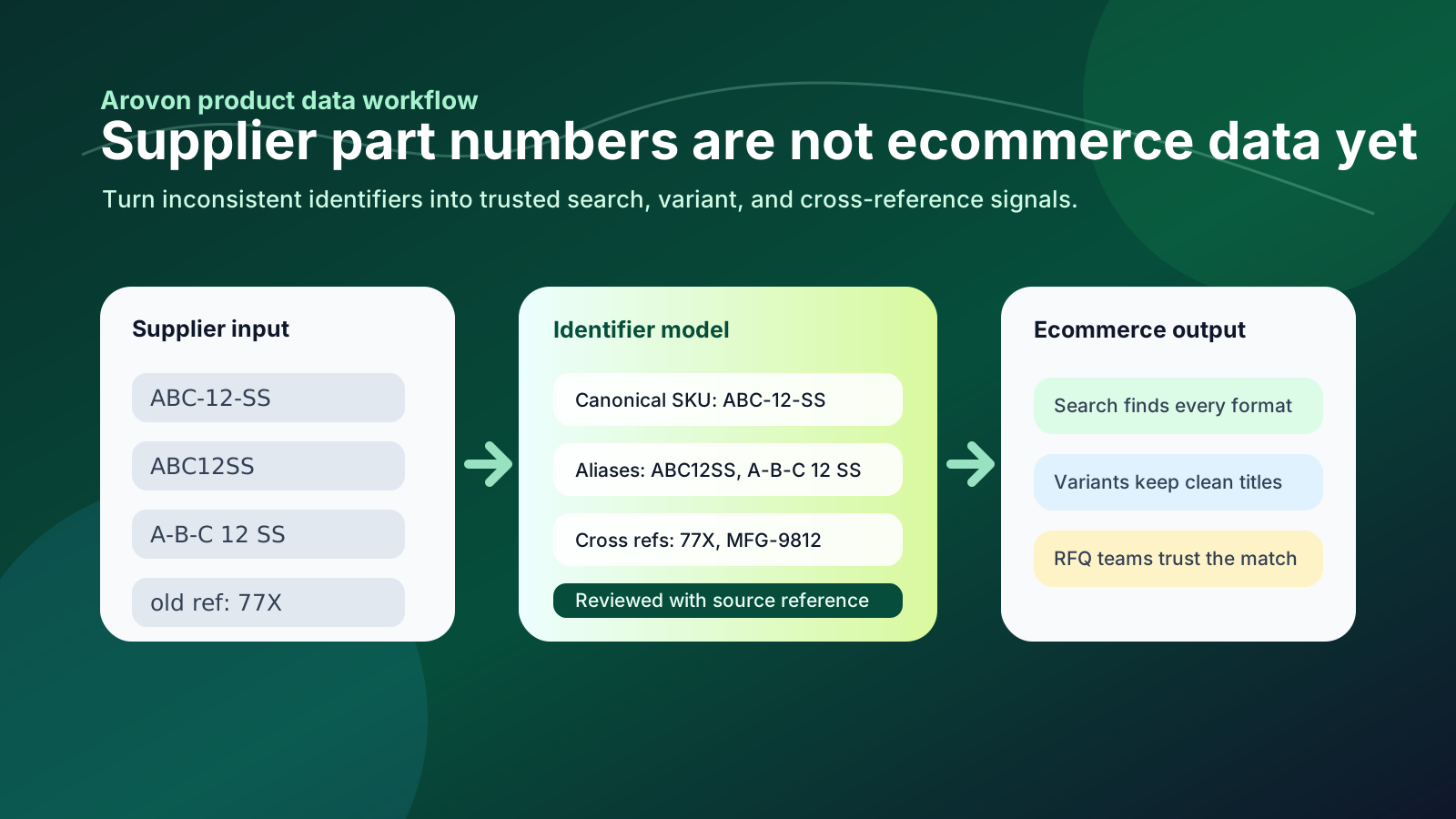
Part numbers look simple until a distributor tries to use them online. A supplier spreadsheet may call one product ABC-12-SS, the PDF catalog may print ABC12SS, the ERP may carry an old internal code, and the customer may search for a competitor reference. Each value matters, but none of them should automatically become the buyer-facing product title or the only searchable identifier.
That is the real work behind supplier part-number cleanup: convert codes into an identifier model that ecommerce, PIM, ERP, quoting, and customer-service teams can all trust. Done well, part numbers improve search, reduce duplicate products, clarify variants, and make RFQ matching faster. Done poorly, they create noisy titles, broken filters, duplicate SKUs, and product pages that buyers do not trust.
This guide is for catalog, ecommerce, and operations teams that receive supplier catalogs, price lists, PDFs, and spreadsheets and need to turn those identifiers into useful ecommerce data.
Quick skim: what to capture before you import
Keep the raw supplier part number exactly as supplied, even if it looks messy.
Choose one canonical ecommerce SKU or item identifier for each sellable product.
Store alternate supplier codes as aliases or searchable references, not as extra products.
Separate manufacturer part numbers, distributor SKUs, old ERP numbers, and competitor cross references.
Flag ambiguous matches for human review before they reach Shopify, BigCommerce, Adobe Commerce, a PIM, or an ERP import.
Why supplier part numbers cause ecommerce problems
A part number is often treated as a product fact, but it is really a relationship between a product, a supplier, a manufacturer, a package, and sometimes a historical system. That is why the same physical item can appear under several codes. Suppliers revise catalogs. Manufacturers change prefixes. Distributors keep legacy ERP numbers. Sales teams add shorthand codes that are useful internally but confusing online.
For ecommerce, the problem becomes visible in four places. Search fails when buyers enter a known code and the storefront only indexes a different version. Product pages duplicate when every supplier code becomes a new item. Variants become inconsistent when a pack suffix or material code is interpreted as the entire product family. Quote teams lose time when they cannot tell whether a requested part is the same as an existing SKU.
The goal is not to make every code disappear. The goal is to preserve every useful identifier while deciding what role each code should play.
Build an identifier model, not a long title
Many distributors try to solve part-number confusion by pushing more codes into the product title. That may help a human who already knows the number, but it weakens the catalog. Titles become unreadable, filters do not improve, and search still struggles with spacing, hyphens, prefixes, and old references.
A stronger approach is to create an identifier model. The canonical SKU is the primary commerce identifier used for the product record. Supplier part numbers are stored as source-specific references. Manufacturer part numbers get their own field. Old internal codes and customer-facing cross references are stored as aliases. Pack, size, material, and finish codes are parsed into attributes when the pattern is reliable enough.
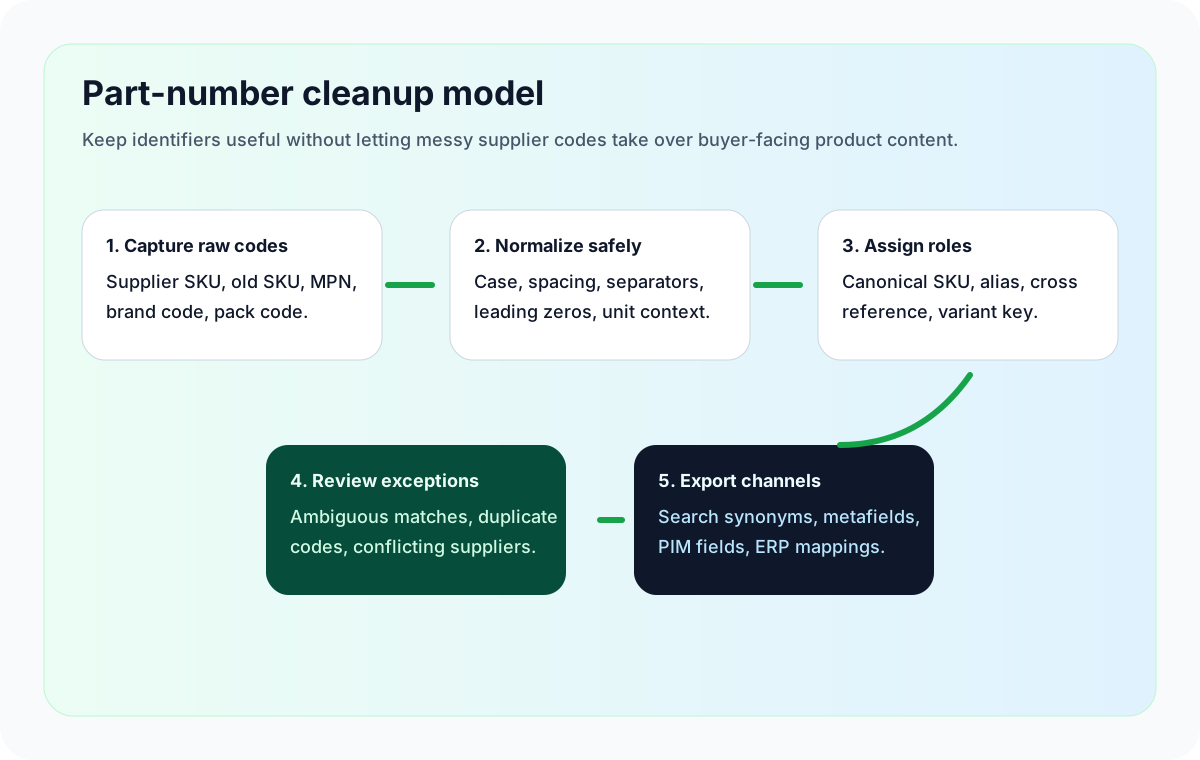
This model supports the way B2B buyers now research and buy. Current B2B ecommerce trend coverage continues to emphasize self-service buying, clearer product information, and connected digital experiences. Those expectations are hard to meet if the only product data available is a pile of unclassified supplier codes.
Separate identifier types before matching products
Before automation can help, your team needs a practical classification for the codes in each source. A supplier SKU is the supplier’s commercial identifier. A manufacturer part number identifies the original product or component. A distributor SKU is the code your business uses to sell, stock, or import the item. A customer or competitor cross reference helps buyers find equivalents but should not replace your actual product identity.
This distinction matters because each identifier answers a different question. Search wants aliases and cross references. ERP wants stable item numbers. Ecommerce wants clean titles, accurate product pages, and searchable references. Sales wants confidence that a quote request maps to the correct item. A PIM wants governance over which fields are authoritative.
Normalize formatting, but preserve the source
Part-number normalization should be careful. Removing hyphens, uppercasing text, and trimming spaces can help matching, but it can also create false matches. In technical catalogs, a leading zero, suffix, separator, or pack code may be meaningful. Store the original source value, a normalized comparison value, and the rule used to create it.
For example, a safe data structure might include source_value, normalized_value, identifier_type, supplier_name, source_document, product_candidate, confidence, and review_status. That gives automation enough structure to propose matches while keeping a trail back to the supplier document. If the match is uncertain, it becomes a review task instead of silently changing the catalog.
Use part numbers to improve search without polluting product pages
Once identifiers are classified, they can support better ecommerce search. Alternate part numbers can be indexed as hidden searchable values. Manufacturer part numbers can appear in a specifications table. Cross references can be included on pages where they are valid and useful. Old ERP codes can remain available for logged-in customers or sales users without overwhelming new buyers.
For platforms such as Shopify, BigCommerce, and Adobe Commerce, the exact destination may differ: metafields, custom fields, searchable attributes, PIM fields, import columns, or integration tables. The principle is the same. Do not force every identifier into the title or description. Put each code where the storefront, search layer, and operations workflow can use it correctly.
A practical review checklist for distributors
Can a buyer search by the supplier code exactly as printed in the catalog?
Can a buyer search by a hyphen-free or spacing-free version without creating false matches?
Is the manufacturer part number stored separately from the distributor SKU?
Are old codes and cross references clearly labeled as aliases, not duplicate products?
Do variant-driving pieces of the code become real attributes such as size, material, finish, voltage, or pack?
Is every automated match traceable to a supplier document, spreadsheet row, or ERP record?
Do uncertain matches stop for review before reaching the live storefront?
Where Arovon fits
Arovon is built for the messy step before clean ecommerce import. Supplier PDFs, spreadsheets, and catalog files often contain valuable part numbers, but they need extraction, normalization, classification, and review before they become reliable commerce data. Arovon helps teams turn those sources into structured rows with source references, review states, and export-ready fields.
That does not mean every match should be blindly automated. For industrial product data, review is a feature, not a failure. The useful workflow is: extract the candidate identifiers, classify their role, propose matches, surface exceptions, approve reviewed data, and then export to the systems that need it.
Start with the product families that create the most friction
Do not begin with the entire catalog. Pick one supplier, one product family, or one repeated quote problem. Measure how many duplicate items, failed searches, manual lookup requests, and ambiguous matches appear today. Then build the identifier model for that slice and test whether search, product pages, and RFQ matching improve.
If your team is preparing product data for a new ecommerce launch, a PIM cleanup, or a recurring supplier catalog update, part numbers are a good pilot area because the pain is concrete and measurable. You can also connect the work to related data-cleanup priorities such as clean product titles, source-backed product data, and a product data staging table.
Make identifiers useful before they become expensive
Supplier part numbers will never be perfectly tidy. The practical question is whether your catalog treats them as unstructured text or as useful ecommerce data. If identifiers are classified, normalized, reviewed, and exported into the right fields, they help buyers find products faster and help internal teams trust the match.
If you want to see how Arovon can convert supplier documents into structured, source-backed product data, request a demo or review the pricing page to plan a focused pilot.