The Difference Between Product Data Extraction, Product Data Enrichment, and PIM
7/1/2026
Extraction, enrichment, and PIM solve different product-data problems. Here is how distributors can separate the work and avoid buying the wrong tool for the job.
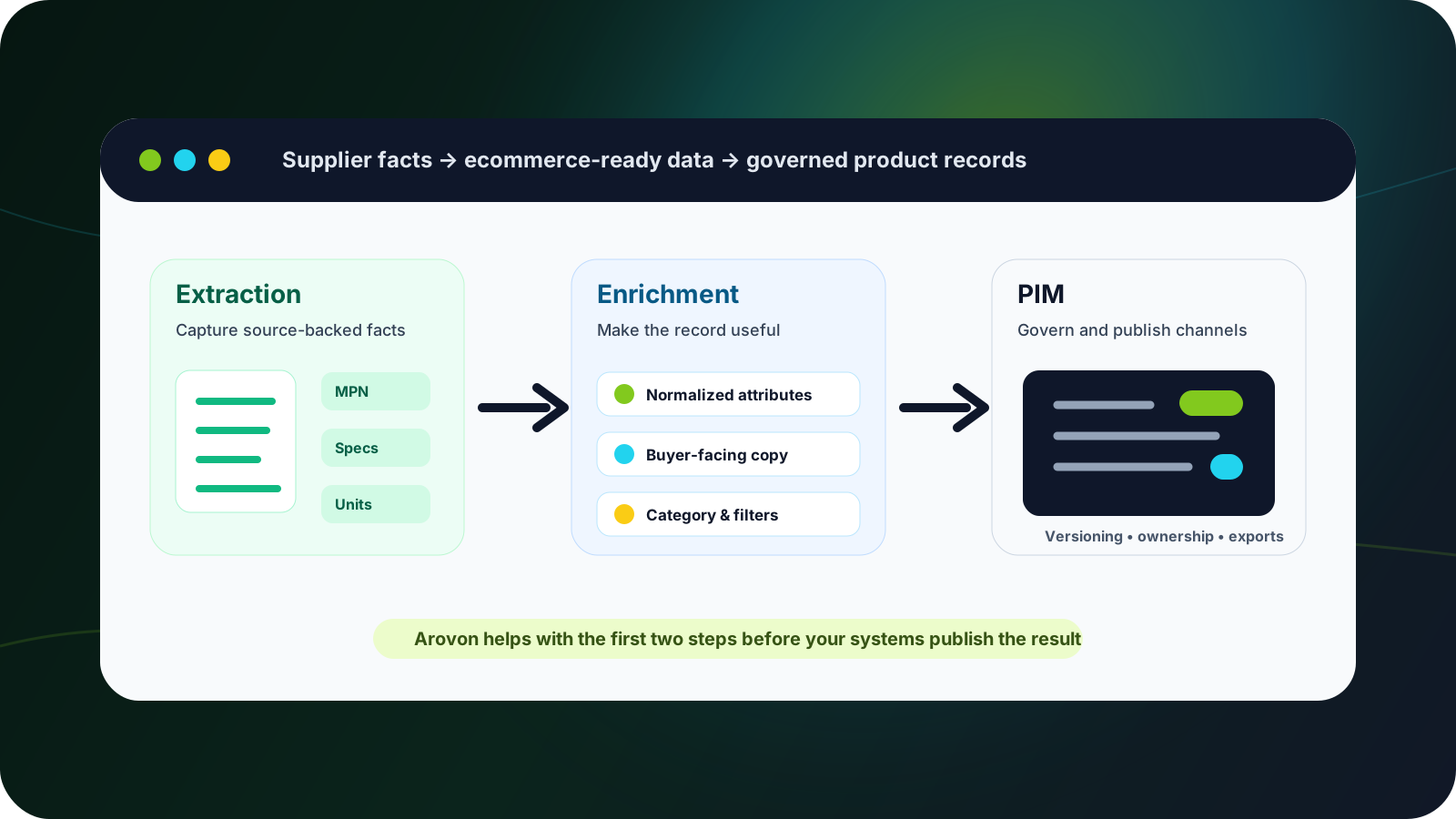
Many distributors use the terms product data extraction, product data enrichment, and PIM as if they describe the same project. That creates expensive confusion. A team may buy a PIM and still have no reliable way to get specifications out of supplier PDFs. Another team may automate extraction and then wonder why the output still is not ready for Shopify, BigCommerce, Adobe Commerce, or a customer portal.
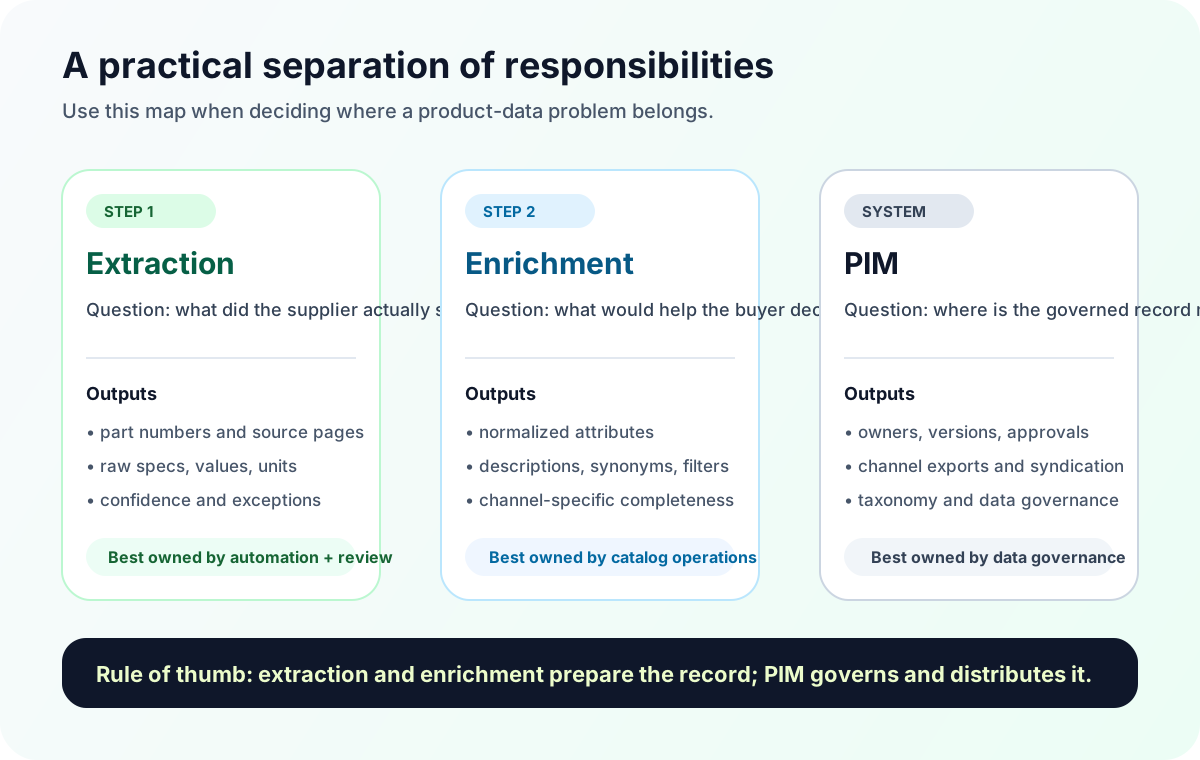
The distinction matters because each layer answers a different operational question. Extraction asks: what facts are in the source? Enrichment asks: what does a buyer or sales team need in order to use those facts? PIM asks: where should the approved product record be governed and distributed? When those responsibilities are clear, ecommerce work becomes easier to scope, easier to measure, and easier for sales teams to trust.
This guide is written for catalog managers, ecommerce managers, operations leads, and distributor owners who need a practical way to place the right work in the right system.
Quick skim: three different jobs
Product data extraction turns supplier PDFs, datasheets, spreadsheets, and price files into structured source-backed facts.
Product data enrichment improves those facts for ecommerce use: normalized attributes, buyer-facing descriptions, categories, filters, synonyms, and completeness checks.
PIM, or product information management, governs the approved product record and publishes it to channels once the data is usable.
Arovon fits before and alongside PIM: supplier documents come in, product rows and attributes are extracted, exceptions are reviewed, and cleaner data is exported for ecommerce or downstream systems.
Product data extraction: capture what the source actually says
Extraction is the work of converting unstructured or semi-structured supplier material into usable fields. For industrial distributors, the source may be a 300-page catalog PDF, a datasheet, a messy spreadsheet, a price list, or a mix of all four. The extraction layer should identify product rows, part numbers, manufacturer codes, dimensions, materials, certifications, units, packaging details, and other source-backed specifications.
The key phrase is source-backed. Extraction should not invent better product content. It should preserve enough context for a reviewer to understand where a value came from and whether it can be trusted. If a supplier table says an O-ring has a cross-section of 3.53 mm, the extraction output should keep that value, unit, product relationship, and preferably the source page or file reference.
Good extraction work usually produces both data and exceptions. A product row may be complete, partly complete, or ambiguous. A table may repeat a value across a family. A PDF may use inches in one section and millimeters in another. Treating those cases as reviewable exceptions is safer than pretending the work is fully automatic.
Product data enrichment: make the record useful for buyers
Enrichment starts after the basic facts are available. Its job is to make the record useful for search, filtering, comparison, quoting, and purchasing. In ecommerce, raw extracted facts are often not enough. Buyers need consistent names, comparable attributes, sensible categories, synonyms, and descriptions that explain what the item is without adding unsupported claims.
For example, extraction may capture “M10 x 40 A2 hex cap screw” from a supplier catalog. Enrichment decides how that becomes a searchable ecommerce record: product type, diameter, length, material grade, head type, thread standard, finish, category path, filter values, and a clear description. It may also add synonyms such as “socket screw” versus “cap screw” if the business uses both terms, but the enrichment process should still respect the source facts.
Current B2B ecommerce trend coverage keeps returning to the same theme: buyers expect easy product search, clear product information, consistent data across channels, and self-service for routine purchases. That does not happen just because data was extracted. It happens when the extracted facts are normalized into a buyer-friendly catalog model.
Extraction output
Source page, table, or spreadsheet reference
Part numbers, raw values, units, and labels
Confidence, missing fields, and review flags
A structured row that can be checked by operations
Enrichment output
Canonical attribute names and normalized units
Categories, filters, variants, and synonyms
Descriptions grounded in approved source facts
Channel-ready completeness for ecommerce import
PIM: govern the approved product record
A PIM system is not just a nicer spreadsheet. It is usually the governed home for product information: ownership, versions, approvals, completeness rules, channel syndication, and exports to ecommerce, marketplaces, print catalogs, or internal systems. For manufacturers and larger distributors, PIM can be essential because multiple teams need to collaborate on one approved product record.
But PIM is often misunderstood as the place where all product-data problems disappear. If the data going into PIM is incomplete, inconsistent, or trapped in supplier PDFs, the PIM will faithfully manage incomplete and inconsistent records. It can help enforce governance, but it does not automatically know which table in a supplier PDF contains the correct thread length or which unit should win when two supplier files conflict.
That is why many distributor projects need a preparation layer before PIM. Product data extraction and enrichment create a cleaner input stream. PIM then governs, distributes, and maintains the approved result.
A practical rule: extraction and enrichment prepare the product record; PIM governs and publishes it.
Where teams usually go wrong
The most common mistake is buying for the system they wish they had instead of the bottleneck they actually have. If the bottleneck is supplier PDFs, manual copy-paste, inconsistent units, and unclear review ownership, a PIM implementation may be premature. If the bottleneck is channel governance across many storefronts and markets, extraction alone will not solve it.
Using PIM as a dumping ground: teams import messy supplier files and expect governance rules to clean them later.
Calling generated copy enrichment even when source facts are missing or unverified.
Automating extraction without a review workflow, which makes sales teams distrust the output.
Skipping attribute strategy, so enriched records still cannot power filters, variants, or AI-assisted search.
Treating ERP data as the complete product record even though ERP usually prioritizes pricing, stock, and ordering rules over buyer-facing content.
A better sequence for distributors
For many industrial distributors, the safer sequence is not “buy a PIM first” or “let AI generate everything.” It is a staged workflow that makes the data more reliable at each step.
Start with one product family or supplier file set where manual work is painful and ecommerce value is clear.
Extract product rows, identifiers, attributes, values, and units from the supplier sources.
Review exceptions with catalog, ecommerce, and sales input so the team agrees on what is trustworthy.
Normalize attributes and units into the category model that will drive filters, variants, comparisons, and imports.
Export the approved data to Shopify, BigCommerce, Adobe Commerce, a PIM, a staging table, or another downstream process.
Measure time saved, review accuracy, completeness, and how much manual quote or catalog cleanup work was avoided.
This sequence keeps the project grounded. It also gives management a clearer business case because the pilot measures a specific operational improvement, not a vague “better data” promise.
How Arovon fits into the workflow
Arovon is designed for the messy preparation work that happens before clean product data reaches ecommerce or governance systems. Supplier files go in. Structured product rows, attributes, normalized values, and reviewable exceptions come out. The goal is not to replace every downstream system. The goal is to reduce the manual work required to turn supplier material into data that those systems can actually use.
That makes Arovon especially relevant when a distributor is planning a site relaunch, preparing ecommerce imports, building better product filters, cleaning supplier PDFs, or trying to make a future PIM project less painful. You can connect this work to your broader ecommerce roadmap through guides such as product data cleanup before a website relaunch, building a sales-trusted review workflow, and preparing industrial product data for AI-powered ecommerce search.
Decision checklist: which problem are you solving?
If your team is reading PDFs and typing values into spreadsheets, start with extraction.
If product rows exist but buyers cannot search, filter, compare, or understand them, focus on enrichment.
If multiple teams and channels need one approved product record, evaluate PIM and governance processes.
If sales does not trust ecommerce data, add review states, source references, and exception handling before pushing more data live.
If a new ecommerce platform is coming, clean and normalize product data before the migration window becomes urgent.
The bottom line
Extraction, enrichment, and PIM are complementary, but they are not interchangeable. Extraction captures source facts. Enrichment turns those facts into useful ecommerce content. PIM governs and distributes the approved record. When distributors separate those responsibilities, they avoid overbuying, reduce rework, and build a catalog operation that sales and buyers can trust.
If your supplier documents are still the bottleneck, request a demo or contact Arovon to see how a review-first product data workflow can help you move from PDFs and spreadsheets to ecommerce-ready data.